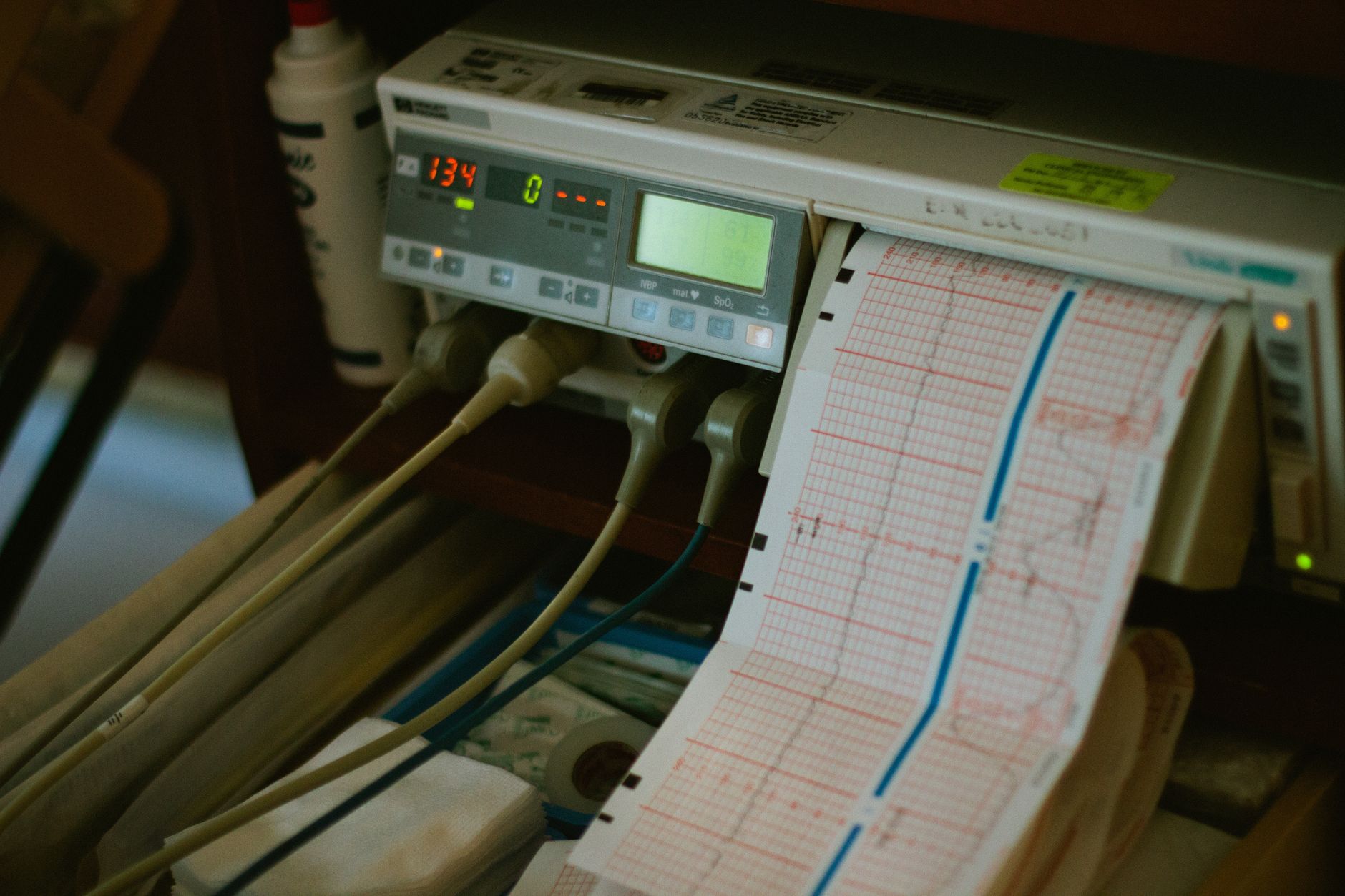
What Is a Cath Lab, and Why Does It Matter?
If your cardiologist has ever mentioned a "cath lab," you may have wondered what goes on inside that room. The cardiac catheterisation laboratory — or cath lab — is a specialised procedure suite where doctors diagnose and treat heart and blood-vessel conditions using thin, flexible tubes called catheters, guided by real-time imaging.
Think of it as a high-definition, live "map" of your heart. Instead of operating in the traditional sense, the cardiologist works through a tiny entry point — usually at the wrist or groin — and navigates to the heart while watching every movement on a screen. No large incisions, no general anaesthesia in most cases, and a much faster recovery compared to open surgery.
Modern cath lab technology has transformed what is possible in heart care. Procedures that once required days in hospital can now be completed in a few hours. For patients in Rajkot and across Gujarat, having access to a fully equipped cath lab means faster, more precise treatment closer to home.
The Foundation: X-Ray Fluoroscopy and Angiography
The backbone of any cath lab is fluoroscopy — a continuous, low-dose X-ray that produces a live moving image on a monitor. When a small amount of contrast dye is injected through the catheter, the coronary arteries (the blood vessels that feed the heart muscle) light up clearly. This process is called coronary angiography.
Angiography answers a critical question: Are any of your arteries narrowed or blocked?
Modern flat-panel detector systems produce sharper images with a lower radiation dose than older equipment. The cardiologist can rotate the imaging arm to view the arteries from multiple angles, building a complete three-dimensional picture of the coronary circulation — all in real time.
What a "Blockage" Actually Looks Like
On the angiogram screen, a healthy artery appears as a smooth, evenly filled tube. A narrowing — called a stenosis — shows up as a pinch or shadow in the contrast column. A complete blockage stops the dye entirely. This visual information tells the cardiologist where a problem is and how serious it is, shaping every decision that follows.
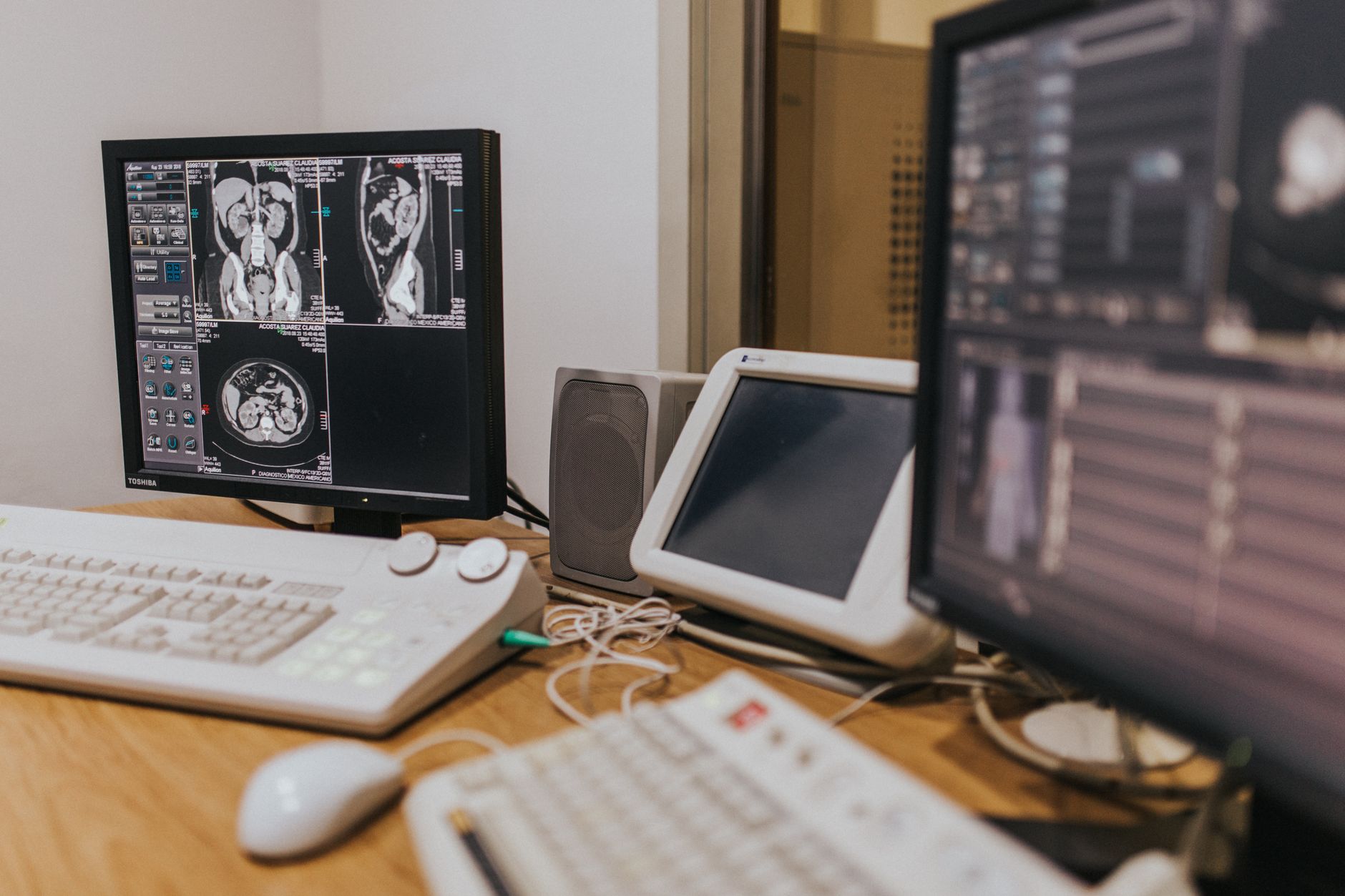
Going Deeper: Intravascular Imaging
Angiography shows the silhouette of an artery from the outside, but modern cath lab technology goes much further inside the vessel wall itself. Two powerful tools make this possible.
Intravascular Ultrasound (IVUS)
IVUS uses a tiny ultrasound probe mounted on a catheter tip. As it moves through the artery, it sends out sound waves and captures a detailed cross-sectional image — almost like a CT scan performed from inside the vessel.
IVUS helps the cardiologist:
- Measure the exact size and shape of the artery
- See whether a plaque is "soft" (fatty) or "hard" (calcified)
- Confirm that a stent has been placed correctly and is fully expanded
- Detect problems that angiography alone might miss
Optical Coherence Tomography (OCT)
OCT takes intravascular imaging a step further, using near-infrared light instead of sound waves. The resolution is roughly ten times finer than IVUS, producing almost microscopic detail of the artery wall. OCT is particularly useful for:
- Identifying the precise edges of a plaque before stenting
- Assessing how well a previously placed stent has healed
- Guiding complex procedures in calcified or unusual arteries
Together, IVUS and OCT give the cardiologist information that is simply not visible on a standard angiogram, reducing the chance of a suboptimal result.
Measuring Blood Flow: Fractional Flow Reserve (FFR) and iFR
Seeing a narrowing is one thing; understanding whether it is actually restricting blood flow to the heart muscle is another. This is where Fractional Flow Reserve (FFR) and its non-hyperaemia equivalent, iFR (instantaneous wave-free ratio), come in.
A pressure-sensing wire is passed across the narrowing. FFR compares the blood pressure just beyond the blockage to the pressure before it. If the ratio falls below a certain threshold, the narrowing is genuinely significant and likely to benefit from a stent or angioplasty. If the ratio is within a normal range, medication alone may be the safer choice.
This technology has meaningfully changed how cardiologists decide who actually needs a stent — preventing unnecessary procedures for some patients while ensuring others receive timely treatment. Large international trials have shown that FFR-guided decisions lead to better long-term outcomes compared to relying on angiography images alone.

Putting It All Together: How Imaging Guides the Procedure
Consider an illustrative scenario: a 58-year-old might come to the cath lab with chest discomfort on exertion. Angiography reveals a moderate narrowing in one coronary artery. The cardiologist uses FFR to confirm it is restricting flow, then switches to OCT to plan precisely where the stent should begin and end. The stent is deployed, and a final IVUS run confirms it is fully expanded against the artery wall. The patient is monitored for a few hours and, in many cases, can go home the same day or the following morning.
Every step of that journey is guided by real-time imaging. The cardiologist is not working "blind" — every millimetre of movement is visible on high-resolution monitors.
The Role of the Entire Cath Lab Team
Modern cath lab technology is only as effective as the people using it. A skilled interventional cardiologist works alongside trained cardiac nurses, radiographers, and technicians. In a well-run cath lab — such as the one at Dr. Nikhila Pachani's practice in Rajkot — the entire team communicates constantly, watching the same screens and responding to changes in real time. This teamwork is as important as the equipment itself.
Key Takeaways
- The cath lab is a specialised room where heart conditions are diagnosed and treated using catheters, contrast dye, and real-time imaging — without large incisions.
- Coronary angiography maps the coronary arteries using live X-ray (fluoroscopy) and contrast dye, revealing blockages and narrowings.
- IVUS and OCT are intravascular imaging tools that look inside the artery wall, providing detail far beyond what angiography alone can show.
- FFR and iFR measure whether a narrowing is truly restricting blood flow, helping cardiologists make evidence-based decisions about stenting.
- All these technologies work together — the cardiologist uses the right combination of tools based on each individual patient's anatomy and clinical situation.
- Modern cath lab procedures are typically performed through the wrist under local anaesthesia, with shorter hospital stays and faster recovery.
Common Questions Patients Ask
"Is the procedure comfortable?"
Most patients describe only mild pressure or a brief warm sensation when the contrast dye is injected. The entry site (usually the wrist) is numbed with local anaesthesia. The cardiologist and nursing team communicate with you throughout, and you are awake but relaxed.
"How much radiation will I receive?"
Modern flat-panel cath labs are designed to use the lowest radiation dose necessary to produce a diagnostic image. The team uses shielding and carefully optimises each image to keep exposure as low as reasonably achievable — a principle called ALARA (As Low As Reasonably Achievable).
"Will I definitely need a stent after angiography?"
Not necessarily. Angiography is first and foremost a diagnostic test. If a significant blockage is found, your cardiologist will discuss the options — which may include a stent (angioplasty), medication, or referral for surgery — based on your full clinical picture. FFR and IVUS data often inform that conversation significantly.

Moving Forward With Confidence
Understanding the technology behind your heart procedure can make the experience feel far less daunting. Modern cath lab technology — from high-resolution angiography to IVUS, OCT, and FFR — means that today's cardiologists can see more, measure more, and treat more precisely than ever before. Patients benefit from procedures that are tailored to their unique anatomy, with imaging guiding every decision from start to finish.
If you have been advised to undergo a coronary angiogram or are experiencing symptoms such as chest discomfort, breathlessness on exertion, or unexplained fatigue, speaking with a qualified interventional cardiologist is the right next step.
To understand your heart health better or to discuss whether a cath lab procedure is appropriate for you, consider booking a consultation with Dr. Nikhila Pachani, Consultant Interventional Cardiologist, Rajkot — where careful diagnosis always comes before any decision about treatment.
Frequently asked questions
- What is a cath lab used for?
- A cardiac catheterisation laboratory (cath lab) is a specialised suite where cardiologists diagnose and treat heart conditions using thin catheters, contrast dye, and real-time imaging such as X-ray fluoroscopy, IVUS, and OCT — typically without large incisions.
- What is the difference between angiography and IVUS?
- Coronary angiography uses contrast dye and X-ray to show the shape of the artery from the outside, revealing blockages. IVUS (Intravascular Ultrasound) places a tiny probe inside the artery to capture detailed cross-sectional images of the artery wall itself, providing information that angiography alone cannot show.
- How does FFR help decide if I need a stent?
- FFR (Fractional Flow Reserve) uses a pressure-sensing wire to measure whether a narrowing in the artery is actually restricting blood flow. If the pressure ratio across the blockage falls below a specific threshold, a stent is likely to help. If it is within a normal range, medication may be the better option, avoiding an unnecessary procedure.
- How long does recovery take after a cath lab procedure?
- Most diagnostic angiograms and straightforward angioplasty procedures are performed through the wrist under local anaesthesia. Many patients are monitored for a few hours and can return home the same day or the following morning. Your cardiologist will give you personalised advice based on your specific procedure.