Uttarayan 2026: Fly Kites with Joy — and Keep Our Birds Safe
Uttarayan is one of Gujarat's most loved festivals. Every year on 14 January, the skies over Rajkot, Ahmedabad, and towns across the state fill with colourful kites. Families gather on rooftops, music plays, and the spirit of the season is truly special.
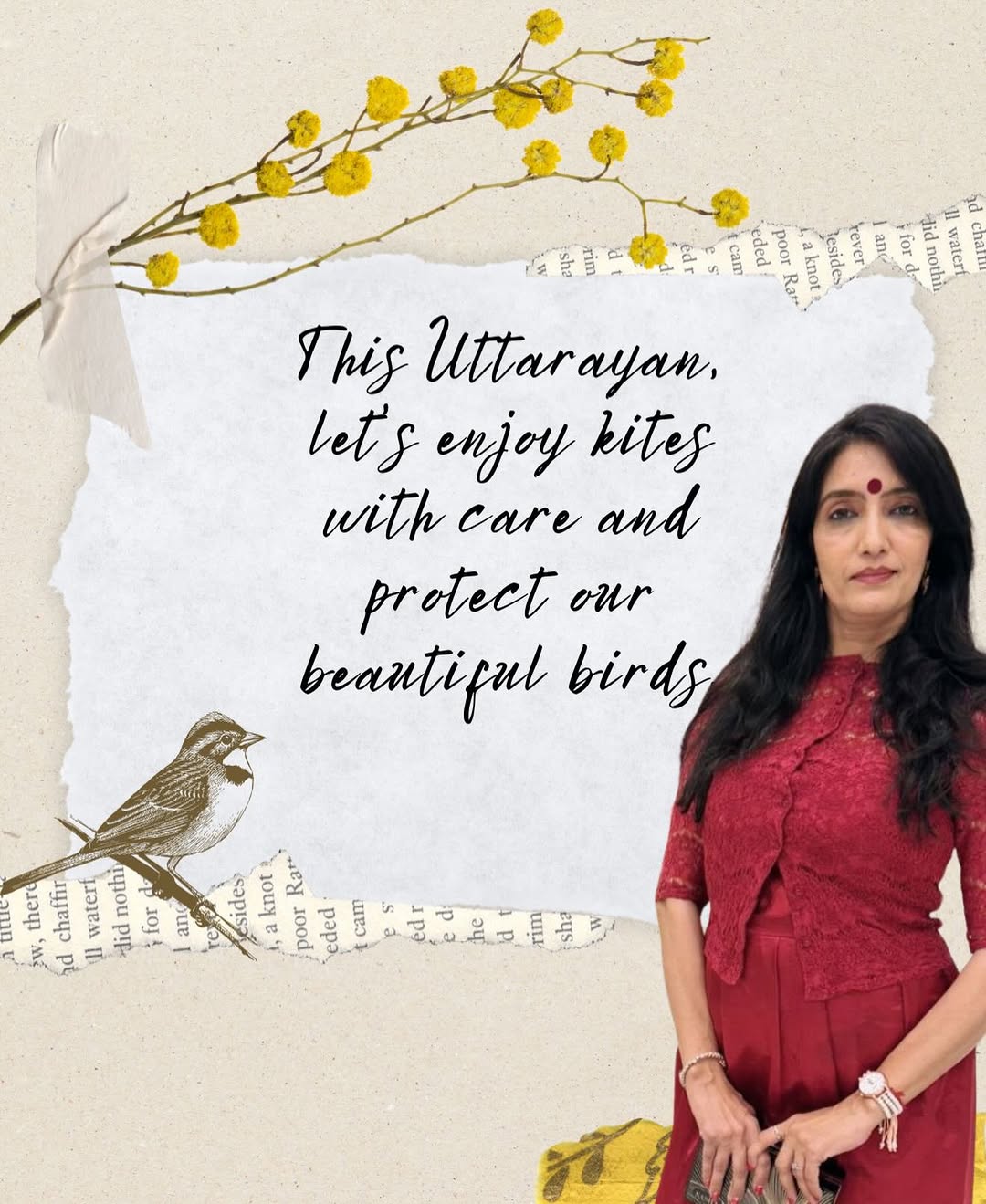
This year, Dr. Nikhila Pachani — Consultant Interventional Cardiologist in Rajkot — shared a heartfelt message ahead of the celebrations:
"This Uttarayan, let's enjoy kites with care and protect our beautiful birds."
Why This Message Matters
The joy of kite flying can come with a hidden cost for wildlife. Sharp synthetic manja (kite string) injures and kills thousands of birds every Uttarayan season across Gujarat. Birds get tangled in loose string that falls from the sky, often suffering deep cuts to their wings, legs, and necks.
Even small birds — sparrows, pigeons, eagles, and migratory species that visit Gujarat in winter — are at serious risk.
How You Can Celebrate Responsibly
Here are simple steps to make this Uttarayan safer for birds:
- Choose cotton or cloth string over sharp synthetic or glass-coated manja.
- Collect fallen kite string from your terrace and the street after flying — don't leave it tangled on trees or wires.
- Keep an eye on the sky — if you spot an injured bird, contact a local animal rescue helpline.
- Spread the word — remind children and neighbours that protecting birds is part of celebrating well.
A Festival Worth Protecting
Uttarayan is a celebration of nature, the sun, and new beginnings. Keeping our birds safe is a small step that makes the festival even more meaningful — for us and for the generations that follow.
Dr. Pachani's message is a gentle reminder that responsible celebrations and community care go hand in hand — values that are very much at the heart of Gujarat's culture.
Wishing everyone across Rajkot and Gujarat a joyful, safe, and eco-friendly Uttarayan! 🪁
This post carries a general community awareness message. For any personal health concerns, please consult a qualified cardiologist or your family doctor.