A Moment of Gratitude in a New Cath Lab
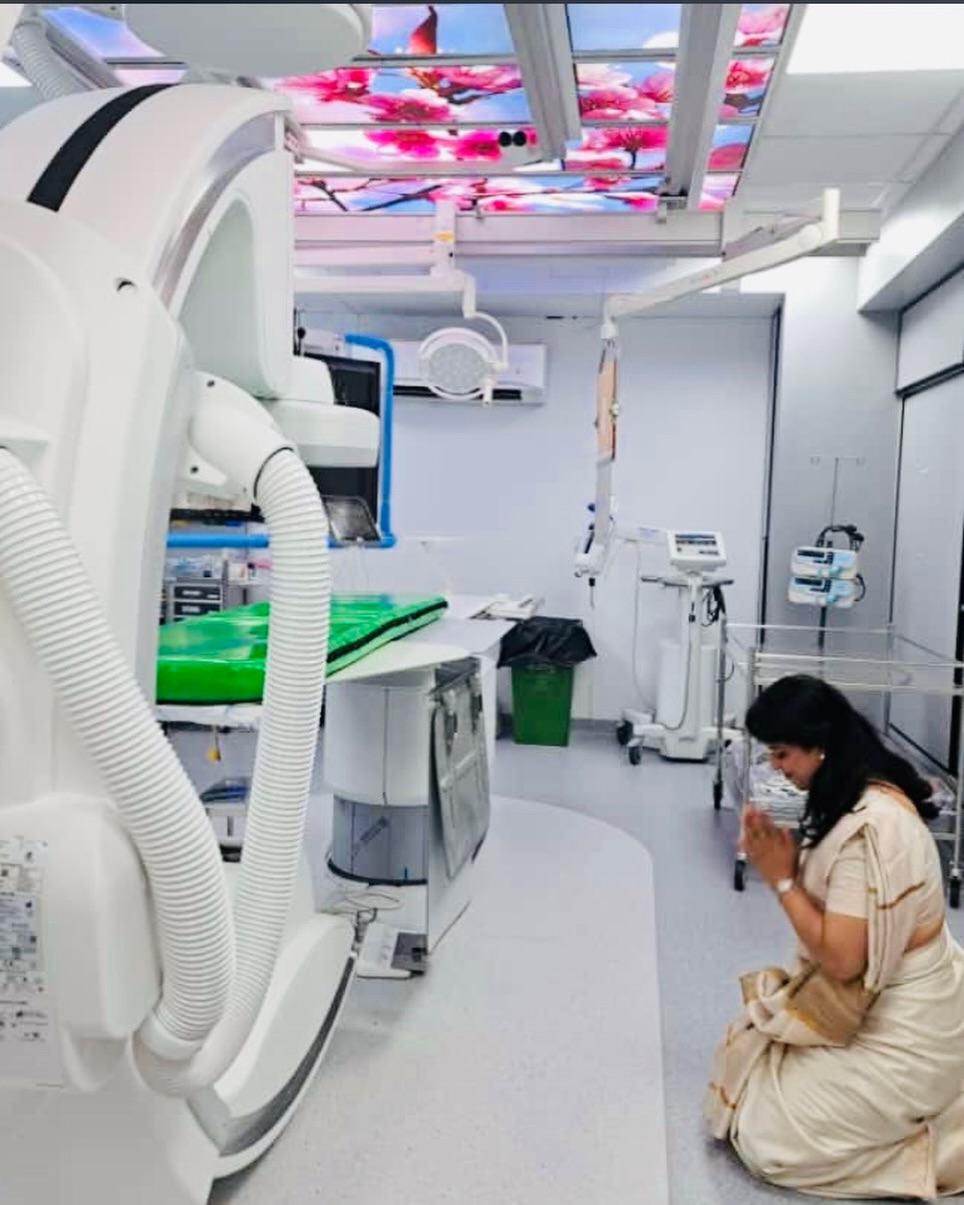
A powerful image. A doctor in a saree, seated on the floor, hands folded in prayer — and beside her, a brand-new cardiac catheterisation laboratory (cath lab) ready to serve patients.
This is Dr. Nikhila Pachani, Consultant Interventional Cardiologist in Rajkot, Gujarat, sharing a deeply personal moment at Backbone Medicity Hospital. Before the first procedure, before the first patient walks in, she pauses to offer gratitude.
What Is a Cath Lab?
A cath lab (cardiac catheterisation laboratory) is a specialised room where heart doctors perform procedures to diagnose and treat heart conditions. Common procedures done here include:
- Coronary angiography — to check blockages in heart arteries
- Angioplasty and stenting — to open blocked arteries
- Pacemaker implantation — to regulate the heartbeat
- Structural heart procedures — such as valve repairs
The large white machine visible in the image is a C-arm X-ray system, which gives the cardiologist a live, moving picture of the heart and blood vessels during the procedure. The ceiling features a calming floral display — a thoughtful touch to help patients feel less anxious in what can be a stressful environment.
Seva | Shakti | Shanti
Dr. Pachani's caption carries the Sanskrit prayer "Lokah Samasta Sukhino Bhavantu" — meaning "May all beings everywhere be happy and free." The three Gujarati words she chose say it simply: સેવા (Service) | શક્તિ (Strength) | શાંતિ (Peace).
This reflects a professional culture where medicine is not just a job — it is a calling rooted in intention and care for every patient who walks through the door.
Heart Care Closer to Home in Rajkot
For people in Rajkot and Saurashtra, a well-equipped cath lab means that many serious heart procedures can now be done locally, without travelling to Ahmedabad or Mumbai. Early diagnosis and timely treatment of heart disease can make a significant difference in outcomes.
If you or a family member has chest pain, shortness of breath, or any heart-related concern, do not wait. Consult a qualified cardiologist at the earliest — a simple consultation can help catch problems before they become emergencies.