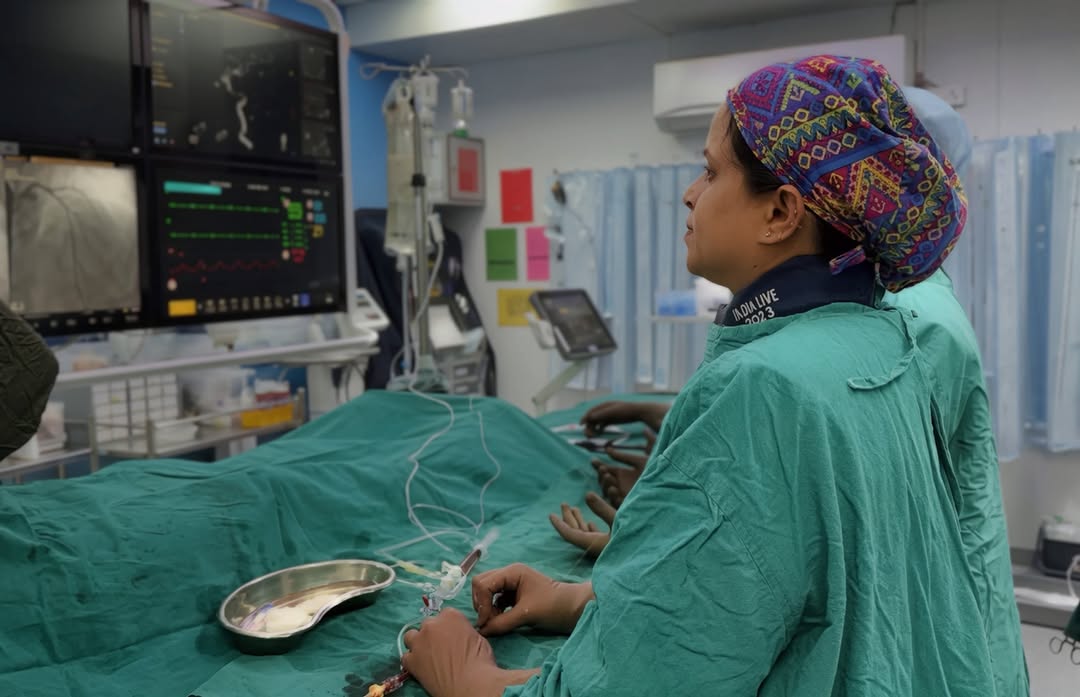
Every Minute Counts: Why Delaying Heart Attack Treatment Can Cost a Life
A heart attack does not wait. It does not pause for confusion, fear, or a second opinion. While a patient hesitates or waits to "see if it gets better," the heart muscle is quietly losing blood supply — and with every passing minute, more damage is done.
Dr. Nikhila Pachani, Consultant Interventional Cardiologist at Backbone Medicity Hospital, Rajkot, recently shared a message that every family in Gujarat should read and remember.
The Problem: Avoidable Delay
One of the most difficult things to witness in cardiac care is not just the disease itself — it is the delay that could have been avoided. Patients arrive late because their symptoms were brushed aside. Families wait because they are not sure the situation is serious. Decisions get postponed until the condition becomes critical.
That delay costs heart muscle. It costs time. It sometimes costs a life.
"It Is Just Acidity" — A Dangerous Assumption
Many people in Rajkot and across Gujarat dismiss early heart attack warning signs as something minor. Here is what you should know:
- Chest pain or pressure is not always acidity or gas. It can be the heart asking for help.
- Breathlessness, especially if it comes on suddenly or without much effort, is not always "nothing serious."
- Sweating, nausea, pain spreading to the arm or jaw are signs that need immediate medical attention.
These symptoms, especially when they appear together, deserve urgent evaluation — not home remedies or a wait-and-watch approach.
Timely Decisions Are the Treatment
In interventional cardiology, speed is medicine. The faster a blocked artery is opened — through a procedure like primary angioplasty — the more heart muscle can be saved. Hospitals with a cath lab, like Backbone Medicity Hospital in Rajkot, are equipped to act quickly when patients arrive on time.
The delay that happens before reaching the hospital is often the most dangerous part of the entire journey.
What You Can Do Right Now
- Learn the symptoms — chest pain, breathlessness, sweating, jaw or arm pain.
- Take them seriously — do not wait to see if they pass.
- Go to a hospital with cardiac care immediately — do not drive yourself; call for help.
- Trust your doctor's advice — early treatment gives the heart the best chance to recover.
As Dr. Pachani puts it: "Sometimes, saving a life is simply about not delaying the decision to act."
If you or someone you know experiences any symptoms of a heart attack, please seek emergency medical care immediately. For routine heart health concerns, consult a qualified cardiologist at the earliest.