A Tiny Heart, a Big Step Towards Health
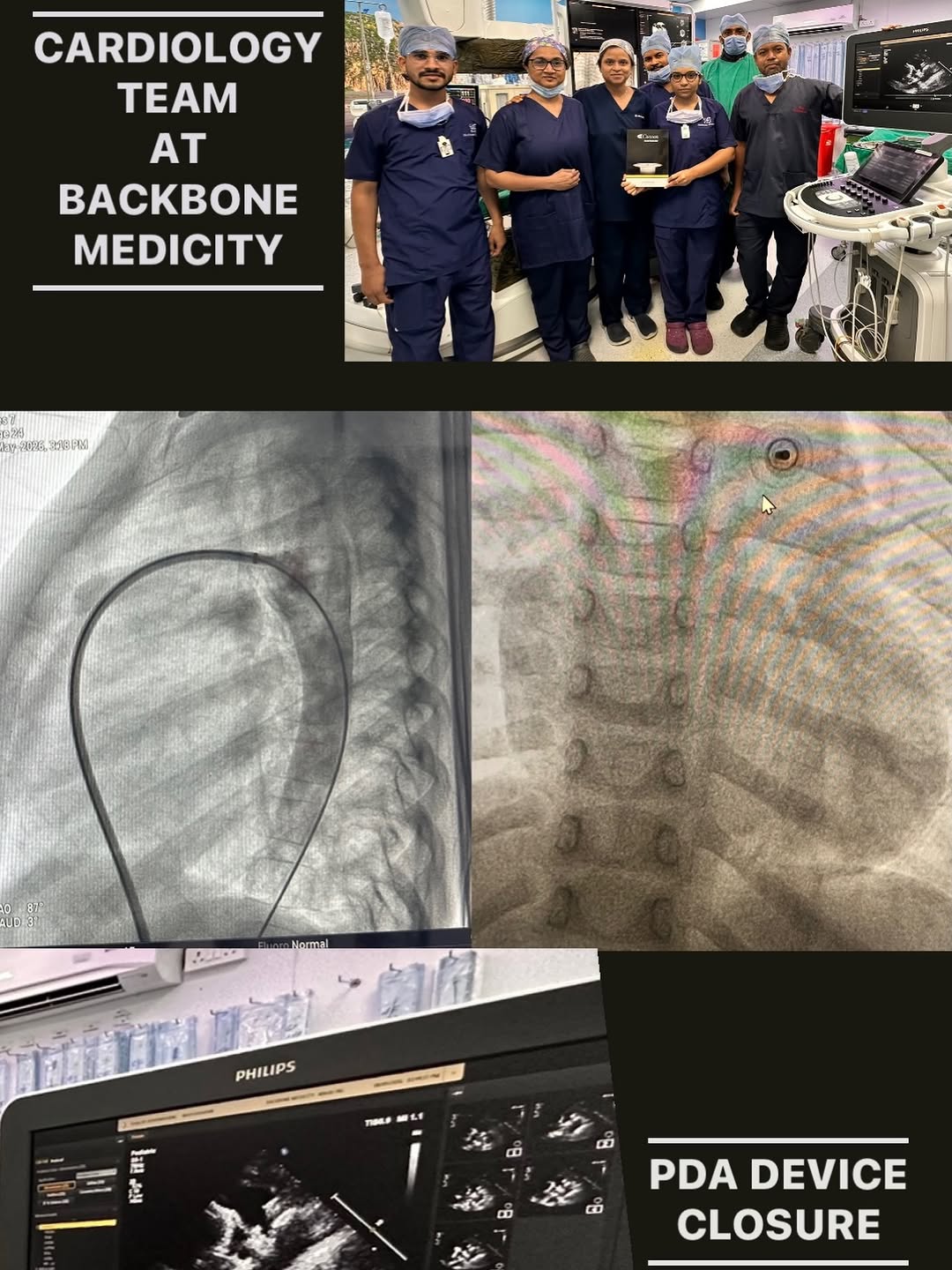
The cardiology team at Backbone Medicity Hospital, Rajkot recently completed a successful PDA (Patent Ductus Arteriosus) device closure in a 3-year-old boy. The procedure was performed using a minimally invasive catheter-based technique — no open-heart surgery was required.
What Is a PDA?
A Patent Ductus Arteriosus (PDA) is a small opening between two major blood vessels near the heart. This opening is normal before a baby is born, but it should close on its own shortly after birth. When it stays open — especially when it is large — extra blood flows to the lungs. This puts strain on the heart and lungs and can affect a child's growth and health.
How Was It Treated?
Instead of open-heart surgery, the team used a device closure technique. A thin, flexible tube (catheter) was guided through a blood vessel in the leg up to the heart. A small device was then placed to block the abnormal opening. The images from the procedure show the catheter wire in position on X-ray (fluoroscopy) and the device visible on echocardiography (ultrasound of the heart).
This approach means:
- No large chest incision
- Shorter hospital stay
- Faster recovery for the child
Team Effort
Dr. Nikhila Pachani expressed gratitude to the entire cath lab and pediatric care team at Backbone Medicity Hospital for their dedication and teamwork in making the procedure a success.
What Should Parents Know?
If your child has been told they have a hole or an opening near the heart, or if your child tires easily, breathes fast, or is not gaining weight properly, an early consultation with a paediatric or interventional cardiologist is important. Many heart conditions in children can today be treated with minimally invasive techniques.
Concerned about your child's heart health? Book a consultation with a qualified cardiologist early — timely evaluation can make a big difference.