What Is Atrial Fibrillation?
Your heart beats in a steady, organised rhythm — roughly 60 to 100 times every minute. This rhythm is controlled by electrical signals that travel through the heart in a precise sequence. In atrial fibrillation (AFib), those electrical signals become chaotic. Instead of a smooth, coordinated squeeze, the upper chambers of the heart (the atria) quiver rapidly and irregularly.
The result is an irregular and often fast heartbeat that you may feel as a fluttering, pounding, or "flip-flopping" sensation in your chest. Sometimes, people feel nothing at all — which makes AFib both common and easy to miss.
AFib is one of the most frequently seen heart rhythm disorders in cardiology clinics across India, including here in Rajkot. It affects people of all ages, though it becomes more common after the age of 50.

Why Does AFib Raise Stroke Risk?
This is the most important question — and understanding the answer can genuinely be life-saving.
When the atria quiver instead of pumping properly, blood does not move through them as efficiently. It can pool and swirl in a small pouch of the left atrium called the left atrial appendage. Pooled, slow-moving blood is prone to clotting.
If a clot forms and then breaks free, it travels through the bloodstream. If it reaches the brain, it can block an artery and cause a stroke.
Here is why this matters so much:
- People with AFib have approximately 5 times higher stroke risk compared to people without AFib.
- AFib-related strokes tend to be more severe than strokes from other causes, because the clots that form in the heart are often larger.
- About 1 in 5 strokes is linked to AFib — many of which could have been prevented with proper treatment.
It is important to understand that the irregular heartbeat itself does not directly damage the brain. The danger comes from the clots it can create. This is why managing atrial fibrillation stroke risk is a top priority for cardiologists.
Recognising the Symptoms of AFib
AFib does not always announce itself loudly. Some people live with it for months without knowing. When symptoms do appear, they may include:
- Palpitations — a racing, fluttering, or irregular heartbeat
- Fatigue or unusual tiredness, especially during activity
- Shortness of breath, even at rest or with mild exertion
- Dizziness or light-headedness
- Chest discomfort or a feeling of pressure
- Weakness, particularly during physical activity
A 55-year-old patient, for example, might visit a clinic in Rajkot complaining only of feeling "tired all the time" — and a routine ECG could reveal AFib that had been silently present for weeks. This is why regular health check-ups are so valuable.

When to Seek Immediate Help
Call for emergency care immediately if you or someone around you experiences:
- Sudden weakness or numbness in the face, arm, or leg (especially on one side)
- Sudden confusion or trouble speaking
- Sudden vision problems
- Sudden severe headache with no known cause
- Sudden difficulty walking or loss of balance
These are warning signs of a stroke. Every minute matters — faster treatment leads to significantly better outcomes.
How Is AFib Diagnosed?
Diagnosing AFib is straightforward when a doctor is looking for it. The key tests include:
Electrocardiogram (ECG or EKG)
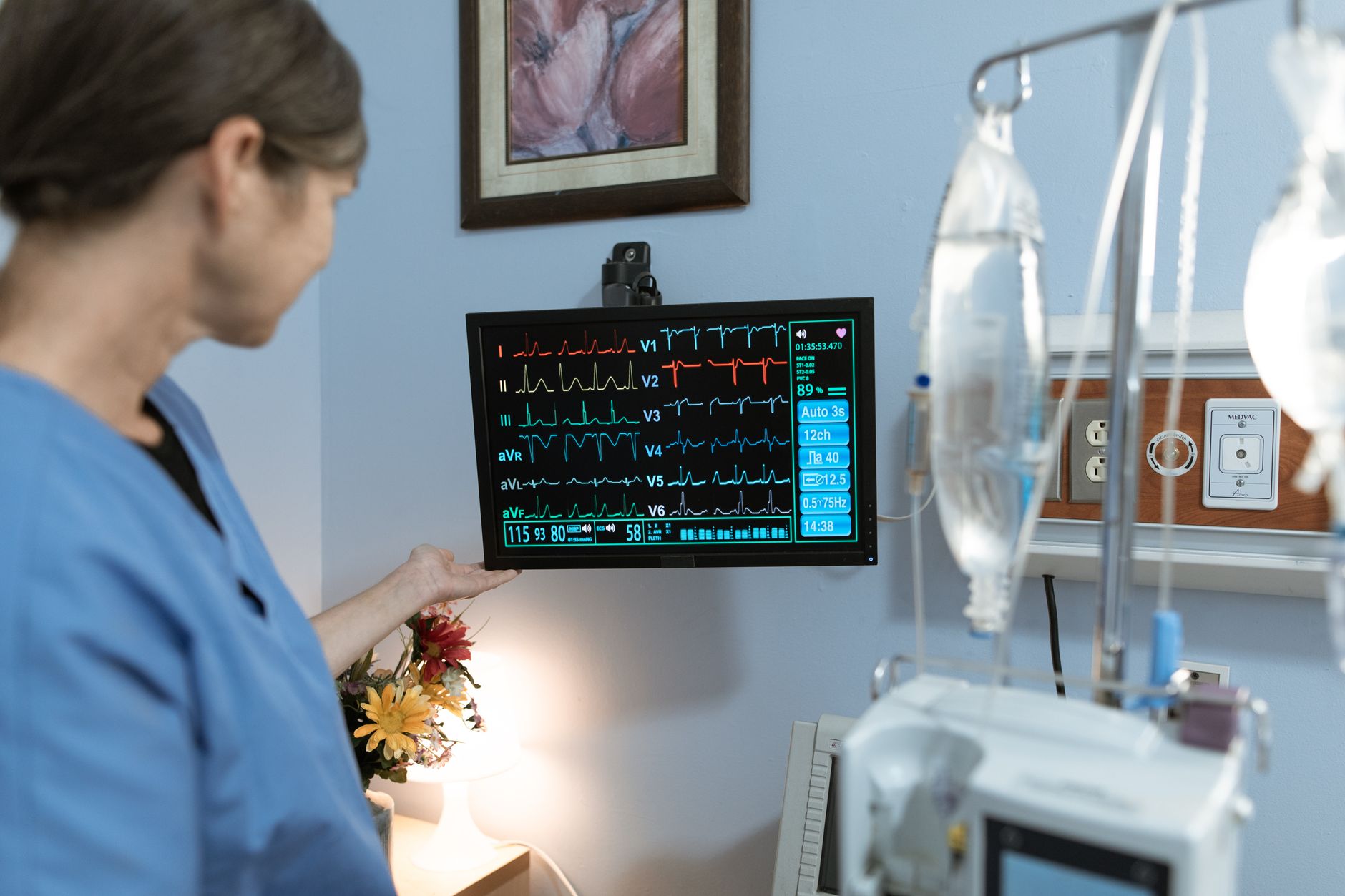
An ECG records the electrical activity of your heart. AFib produces a very characteristic pattern — absent P-waves and an irregularly irregular rhythm — that a cardiologist can identify quickly. An ECG is non-invasive, comfortable, and takes only a few minutes.
Holter Monitor
Because AFib can come and go (called "paroxysmal AFib"), a single ECG may sometimes miss it. A Holter monitor is a small, wearable device that records your heart rhythm continuously for 24 to 48 hours, or even longer, giving a fuller picture.
Echocardiogram
An echocardiogram uses sound waves to create images of the heart. It helps doctors check the size and function of the heart chambers and look for blood clots — particularly in the left atrial appendage.
Blood Tests
Blood tests help identify underlying causes or risk factors such as thyroid problems, anaemia, or kidney issues that may be contributing to the AFib.
How Is Atrial Fibrillation Stroke Risk Managed?
Once AFib is diagnosed, the treatment plan has two main goals: controlling the heart rhythm or rate, and preventing stroke. These are often addressed together.
1. Anticoagulation (Blood Thinners)
This is the cornerstone of stroke prevention in AFib. Blood-thinning medicines (anticoagulants) reduce the ability of the blood to form clots.
Doctors use a scoring tool called the CHA₂DS₂-VASc score to assess each person's individual stroke risk. This score considers factors like age, gender, high blood pressure, diabetes, previous stroke, and heart failure. Based on this score, a cardiologist decides whether anticoagulation therapy is recommended.
Common anticoagulants used today include:
- Warfarin — an older, well-established option that requires regular blood test monitoring
- Direct oral anticoagulants (DOACs) — newer medicines like rivaroxaban, apixaban, and dabigatran that are easier to use and do not require frequent blood tests
It is very important not to stop or adjust blood thinners without consulting your doctor. These medicines require careful, personalised management.
2. Rate Control
The goal here is to slow the heart rate to a comfortable, manageable level — typically below 110 beats per minute at rest. Medicines like beta-blockers, calcium channel blockers, or digoxin are used for this purpose.
3. Rhythm Control
In some patients, the goal is to restore a normal heart rhythm. This can be achieved with:
- Medicines (antiarrhythmics)
- Cardioversion — a controlled, brief electrical shock delivered under sedation to reset the heart rhythm
- Catheter ablation — a procedure where a cardiologist uses thin, flexible tubes (catheters) to target and destroy the abnormal electrical pathways causing AFib. This is a minimally invasive procedure available at specialised cardiac centres.
4. Treating Underlying Causes
AFib is often linked to other conditions such as high blood pressure, thyroid disorders, sleep apnoea, obesity, or valve disease. Managing these underlying factors is an essential part of reducing both AFib burden and stroke risk.
Lifestyle Choices That Support Heart Rhythm Health
While medicines and procedures play a crucial role, everyday lifestyle habits matter a great deal too:
- Manage blood pressure — hypertension is one of the leading drivers of AFib
- Maintain a healthy weight — even modest weight loss can reduce AFib episodes
- Limit or avoid alcohol — alcohol is a well-known trigger for AFib episodes
- Stay physically active — moderate, regular exercise supports overall heart health
- Quit smoking — smoking damages the heart and blood vessels in multiple ways
- Manage stress — chronic stress can aggravate heart rhythm problems
- Follow a heart-friendly diet — rich in vegetables, fruits, whole grains, and low in processed foods and excess salt
Many patients seen in Rajkot and across Gujarat have found that addressing lifestyle factors alongside medical treatment makes a meaningful difference to how they feel day to day.
Key Takeaways
- AFib is a common heart rhythm disorder where the upper chambers of the heart beat chaotically instead of in a steady rhythm.
- The link to stroke is direct and significant — AFib raises stroke risk approximately fivefold by promoting blood clot formation in the heart.
- AFib-related strokes are often severe but largely preventable with timely diagnosis and appropriate treatment.
- Anticoagulant (blood-thinning) therapy is the most important tool for reducing stroke risk in AFib patients.
- Treatment is personalised — your cardiologist will assess your individual risk profile before recommending rate control, rhythm control, or a combination of both.
- Lifestyle changes — controlling blood pressure, reducing alcohol, and staying active — support medical treatment and reduce AFib burden.
- Symptoms can be silent — regular heart health check-ups are valuable, especially if you are over 50 or have other risk factors.
If you have been experiencing an irregular heartbeat, unexplained fatigue, or palpitations, or if you have already been diagnosed with AFib and want to understand your stroke risk better, consider speaking with a qualified cardiologist. Early, personalised care makes a real difference — and you do not have to navigate this alone. Feel free to book a consultation with Dr. Nikhila Pachani, Consultant Interventional Cardiologist in Rajkot, to discuss your heart health in detail.
Frequently asked questions
- What is the connection between atrial fibrillation and stroke risk?
- In atrial fibrillation (AFib), the upper chambers of the heart beat chaotically, causing blood to pool and form clots. If a clot travels to the brain, it causes a stroke. People with AFib have approximately five times higher stroke risk compared to those without it, making stroke prevention a central part of AFib management.
- Can atrial fibrillation be present without any symptoms?
- Yes. AFib can be completely silent — some people have no noticeable symptoms at all. Others may feel palpitations, fatigue, shortness of breath, or dizziness. This is why routine ECG screening during health check-ups is valuable, especially for people over 50 or those with risk factors like high blood pressure or diabetes.
- How do blood thinners help in atrial fibrillation?
- Blood-thinning medicines (anticoagulants) reduce the blood's ability to form clots. Since AFib-related strokes are caused by clots forming in the heart and travelling to the brain, anticoagulants significantly lower the risk of this happening. Your cardiologist will assess your individual stroke risk score before recommending the most suitable anticoagulant for you.
- Is atrial fibrillation a permanent condition?
- Not always. AFib can be paroxysmal (comes and goes on its own), persistent (lasts longer and needs treatment to stop), or long-standing persistent/permanent. With appropriate treatment — including medicines, cardioversion, or catheter ablation — many patients achieve good rhythm control or significant reduction in AFib episodes. Your cardiologist will recommend the approach best suited to your specific situation.