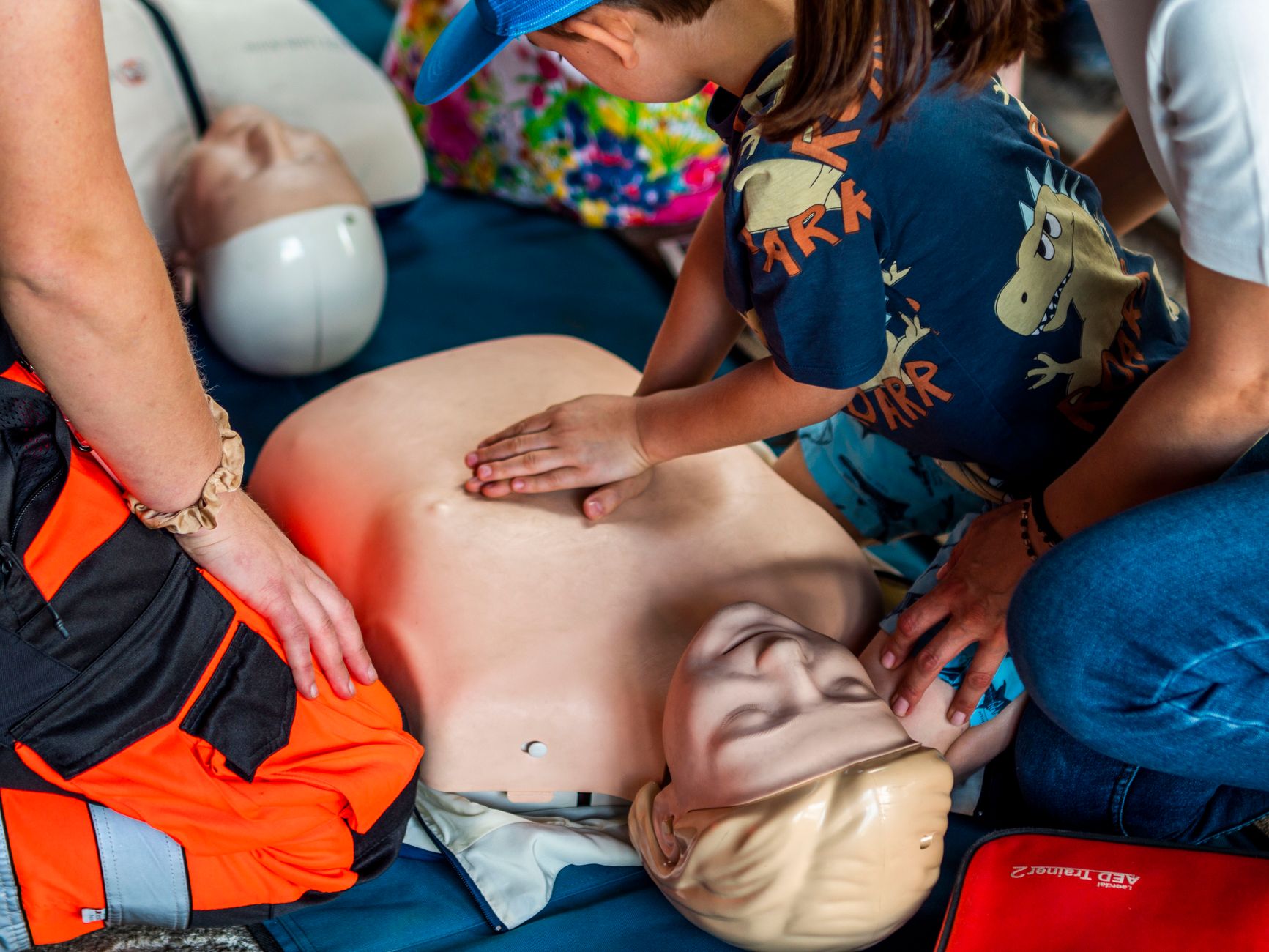
Imagine you are at home in Rajkot on a regular afternoon. A family member suddenly collapses, is unresponsive, and is not breathing normally. Every second that passes matters. What you do in the next two minutes can mean the difference between life and death.
That is the power of knowing CPR basics.
Cardiopulmonary Resuscitation — CPR — is a simple, learnable skill that keeps blood and oxygen moving to the brain and heart when someone's heart has stopped. You do not need to be a doctor to do it. You just need to know how.
What Is Cardiac Arrest — and Why Is It Different from a Heart Attack?
Many people use "heart attack" and "cardiac arrest" interchangeably, but they are different.
- A heart attack happens when blood flow to part of the heart muscle is blocked. The person is usually conscious, may have chest pain, and needs urgent medical care — but the heart is still beating.
- Cardiac arrest happens when the heart suddenly stops beating altogether. The person loses consciousness within seconds and stops breathing normally.
Cardiac arrest can happen because of a heart attack, but it can also be triggered by an electrical disturbance in the heart, severe trauma, drowning, or other causes. Without help within minutes, the brain begins to suffer permanent damage.
CPR is the emergency response to cardiac arrest.
Why Bystander CPR Matters So Much
Studies consistently show that survival rates from out-of-hospital cardiac arrest can double or even triple when a bystander starts CPR immediately. Ambulances — even in a responsive city like Rajkot — take several minutes to arrive. Those minutes are critical.
When the heart stops, the brain can only tolerate about 4–6 minutes without oxygen before serious damage sets in. Chest compressions act as a manual pump, keeping oxygenated blood circulating until medical help takes over.
If you are with someone who collapses and stops breathing normally, you are their first line of help.
How to Recognise a Cardiac Arrest
Before you start CPR, make sure the person actually needs it. Check for these signs:
- Unresponsive: Tap their shoulders firmly and shout, "Are you okay?" — no reaction.
- Not breathing normally: No chest rise, no breath sounds, or only occasional gasping (called agonal breathing — this is not normal breathing).
- No pulse (only check if you are trained; do not delay CPR trying to find one).
If even one of these is unclear, it is safer to start CPR than to wait.
The CPR Basics: A Step-by-Step Guide for Adults
Here is a straightforward, evidence-based approach recommended by major cardiac organisations worldwide.
Step 1 — Call for Help First
Shout for someone nearby. Dial 108 (India's emergency ambulance number) immediately, or ask a bystander to call while you begin CPR. Put the phone on speaker so you can follow instructions from the dispatcher.
Step 2 — Position the Person Safely
Lay the person on their back on a firm, flat surface — the floor is ideal. Kneel beside their chest.
Step 3 — Start Chest Compressions
This is the most important part of CPR basics.
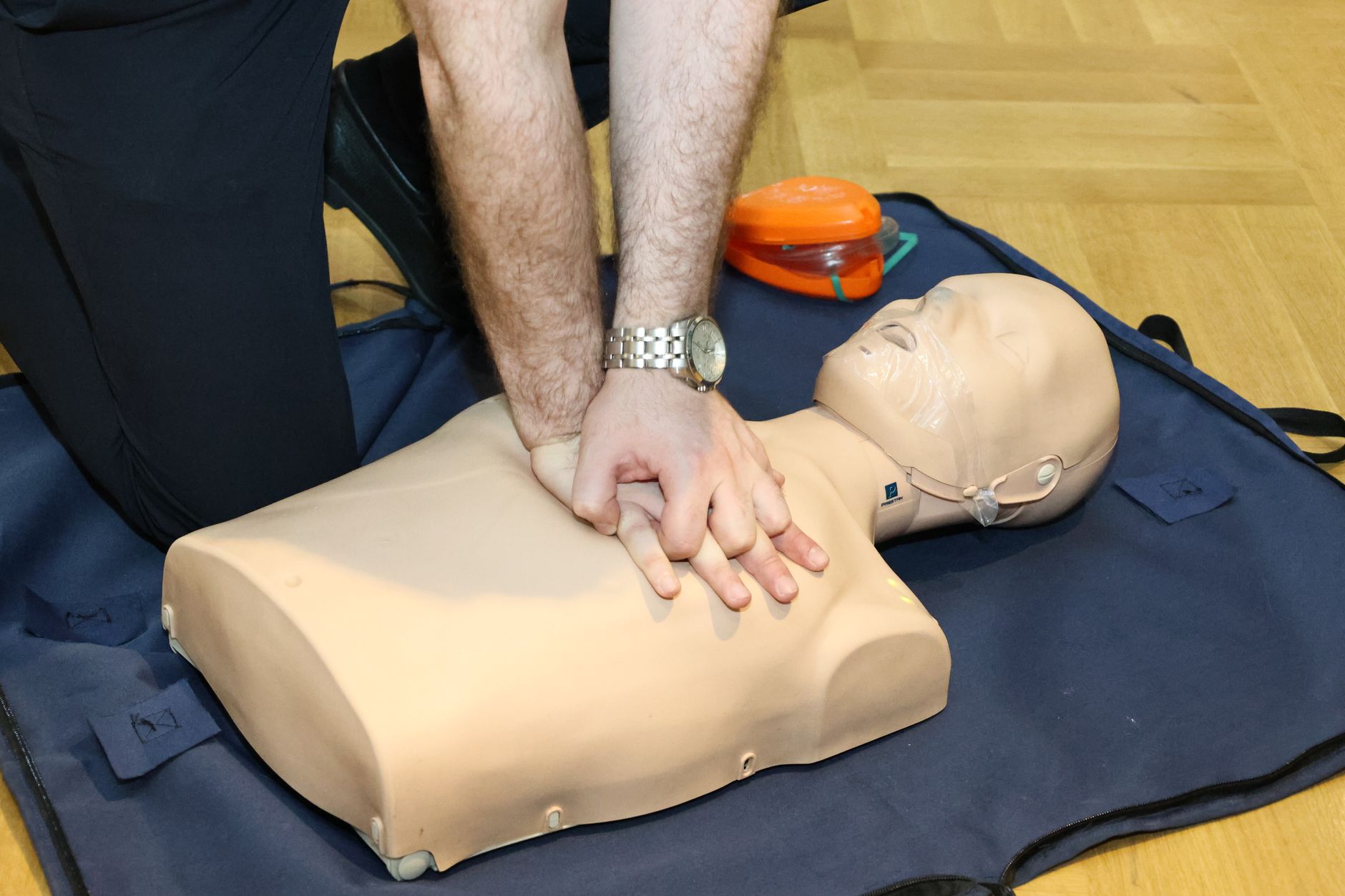
- Place the heel of one hand on the centre of the chest (lower half of the breastbone).
- Place your other hand on top, fingers interlaced.
- Keep your arms straight and use your body weight — not just your arms — to press straight down.
- Push at least 5 cm (2 inches) deep — this feels more forceful than most people expect.
- Press at a rate of 100–120 compressions per minute. A helpful rhythm guide: the beat of the song Stayin' Alive by the Bee Gees is almost exactly this speed.
- Allow the chest to fully recoil (rise back up) between compressions. Do not lean on the chest.
- Do not stop unless the person starts breathing normally, a defibrillator (AED) is ready to use, or trained medical responders take over.
Step 4 — Rescue Breaths (Optional for Untrained Bystanders)
If you are trained in CPR, give 2 rescue breaths after every 30 compressions:
- Tilt the head back gently, lift the chin.
- Pinch the nose shut, seal your mouth over theirs, and breathe in for about 1 second — just enough to see the chest rise.
- Give 2 breaths, then return immediately to compressions.
If you are untrained or unsure, hands-only CPR (continuous chest compressions without rescue breaths) is still highly effective and is now widely recommended for adult cardiac arrest. Do not let uncertainty about rescue breaths stop you from starting compressions.

What About Children and Infants?
CPR technique varies slightly for younger patients:
- Children (1–8 years): Use one or two hands depending on the child's size. Push down about 5 cm. Give 30 compressions to 2 rescue breaths.
- Infants (under 1 year): Use just two fingers (index and middle) on the centre of the chest, just below the nipple line. Push down about 4 cm. Rescue breaths: cover both the mouth and nose with your mouth.
For children and infants, rescue breaths are considered more important than in adults because their cardiac arrest is often related to breathing problems rather than a primary heart issue.
AEDs — Your Powerful Ally
An Automated External Defibrillator (AED) is a portable device that delivers an electric shock to restore the heart's normal rhythm. Many airports, shopping malls, gyms, and large offices now have AEDs available.
If one is nearby:
- Switch it on — it will talk you through the process with voice instructions.
- Attach the pads to bare skin as shown in the diagrams on the pads.
- Make sure no one is touching the person when it analyses and delivers the shock.
- Resume CPR immediately after the shock.
AEDs are designed for untrained bystanders. Do not hesitate to use one.
CPR Basics: Key Takeaways
- Cardiac arrest means the heart has stopped — CPR keeps blood and oxygen moving until help arrives.
- Call 108 immediately and start CPR as soon as you recognise cardiac arrest.
- Push hard and fast in the centre of the chest — at least 5 cm deep, 100–120 times per minute.
- Hands-only CPR (no rescue breaths) is effective for adult bystander CPR if you are untrained.
- Allow the chest to fully recoil between compressions.
- Use an AED if one is available — it will guide you step by step.
- Do not stop until professional help arrives or the person recovers.
- Anyone can learn CPR — consider taking a certified course near you in Rajkot.

Common Questions Families Ask
"What if I do something wrong and hurt the person?"
Rib injuries are possible during CPR, but they are far less serious than death from cardiac arrest. Legally and ethically, bystanders who act in good faith to help someone in an emergency are protected. Doing something is almost always better than doing nothing.
"How will I remember all this under pressure?"
That is exactly why hands-only CPR exists — fewer steps, lower barrier. Push hard, push fast, don't stop. The 108 dispatcher can also coach you in real time over the phone.
"Should my whole family learn CPR?"
Absolutely. Most cardiac arrests happen at home, often witnessed by a family member. Many hospitals, community health centres, and voluntary organisations across Gujarat offer periodic CPR training workshops. Encouraging even one more person in your household to learn could save a life.
A Note on Heart Health Prevention
While knowing CPR basics is vital, preventing cardiac events through regular heart check-ups, a healthy lifestyle, managing blood pressure, diabetes, and cholesterol remain equally important. Families with a history of heart disease, or individuals who experience symptoms such as chest discomfort, unexplained breathlessness, or palpitations, should seek a cardiologist evaluation early.
If you have concerns about your heart health or a family member's risk for cardiac events, consider booking a consultation with a qualified interventional cardiologist. Early evaluation and personalised guidance can make a meaningful difference to your long-term heart health.
Frequently asked questions
- What is the correct rate for chest compressions during CPR?
- Chest compressions should be delivered at a rate of 100 to 120 per minute, pressed at least 5 cm (2 inches) deep into the centre of the chest. A common memory aid is the beat of the song 'Stayin' Alive' by the Bee Gees, which closely matches this rhythm.
- Can I perform CPR if I have never been formally trained?
- Yes. Hands-only CPR — continuous chest compressions without rescue breaths — is recommended for untrained bystanders responding to adult cardiac arrest. Push hard and fast in the centre of the chest and call 108. The emergency dispatcher can guide you in real time.
- How is CPR different for children compared to adults?
- For children aged 1–8 years, use one or two hands and compress about 5 cm. For infants under 1 year, use just two fingers and compress about 4 cm. Rescue breaths are considered more important in children and infants, as their cardiac arrest is often caused by breathing problems rather than a primary heart issue.
- When should I stop CPR once I have started?
- Continue CPR until the person begins breathing normally on their own, a trained medical team arrives and takes over, an AED is ready to be used (pause briefly for the shock, then resume), or you are physically unable to continue. Do not stop prematurely — consistent compressions are critical for survival.