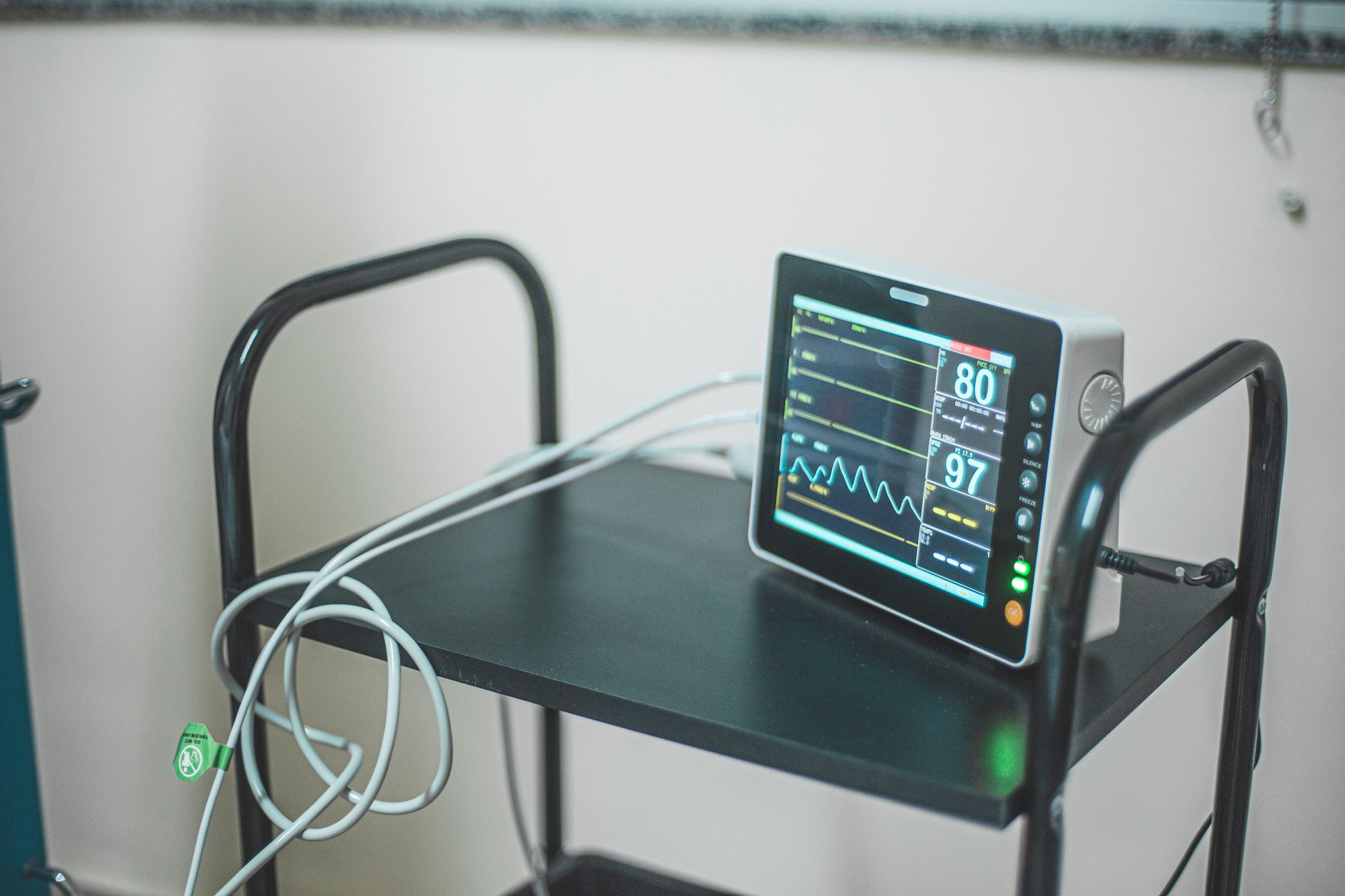
What Is an ECG Test?
If you have ever visited a cardiologist or even a general physician for chest discomfort, breathlessness, or a routine health check-up, there is a good chance you were asked to do an ECG test — short for electrocardiogram. In some places it is also written as EKG (from the German spelling). Whatever you call it, the test does one simple thing: it records the electrical activity of your heart and prints it out as a series of waves on paper or a screen.
Those squiggly lines may look confusing at first glance, but to a trained cardiologist, they tell a remarkably detailed story — about your heart rate, heart rhythm, and whether the heart muscle is under any kind of stress or injury.
The ECG test is quick, non-invasive, comfortable, and widely available. At clinics across Rajkot and throughout Gujarat, it is often the very first investigation a doctor orders when evaluating heart health.
How Does the Heart Produce Electrical Signals?
Your heart beats because of tiny electrical impulses that travel through it in a very specific pathway — over and over again, tens of thousands of times a day. Here is the basic journey:
- The SA node (sinoatrial node), located in the upper right chamber (right atrium), fires a signal — this is your natural "pacemaker."
- The signal spreads across both upper chambers (atria), making them squeeze and push blood into the lower chambers.
- It then passes through the AV node (atrioventricular node) — a relay station — before travelling down specialised pathways (the Bundle of His and Purkinje fibres) into the lower chambers (ventricles).
- The ventricles contract powerfully, pushing blood to the lungs and the rest of the body.
This whole electrical sequence happens in less than a second. An ECG test captures each step of this journey every single heartbeat.

What Happens During an ECG Test?
Many patients feel nervous before their first ECG test, imagining it might be uncomfortable or involve electricity entering the body. The reassuring truth is quite the opposite.
The procedure step by step:
- You will be asked to lie down comfortably on an examination table.
- Small sticky patches called electrodes are placed on your chest, arms, and legs — usually 10 of them.
- These electrodes are connected by wires to the ECG machine. They only detect the electrical signals your heart is already producing; no electricity is passed into your body.
- The machine records the signals from 12 different angles (called "leads") simultaneously.
- The entire recording usually takes less than 5 minutes.
- You breathe normally, stay still, and relax.
The result is a printout — or a digital display — showing 12 rows of tracings, each representing a different view of your heart's electrical activity.
Reading the Waves: What Do the Lines Mean?
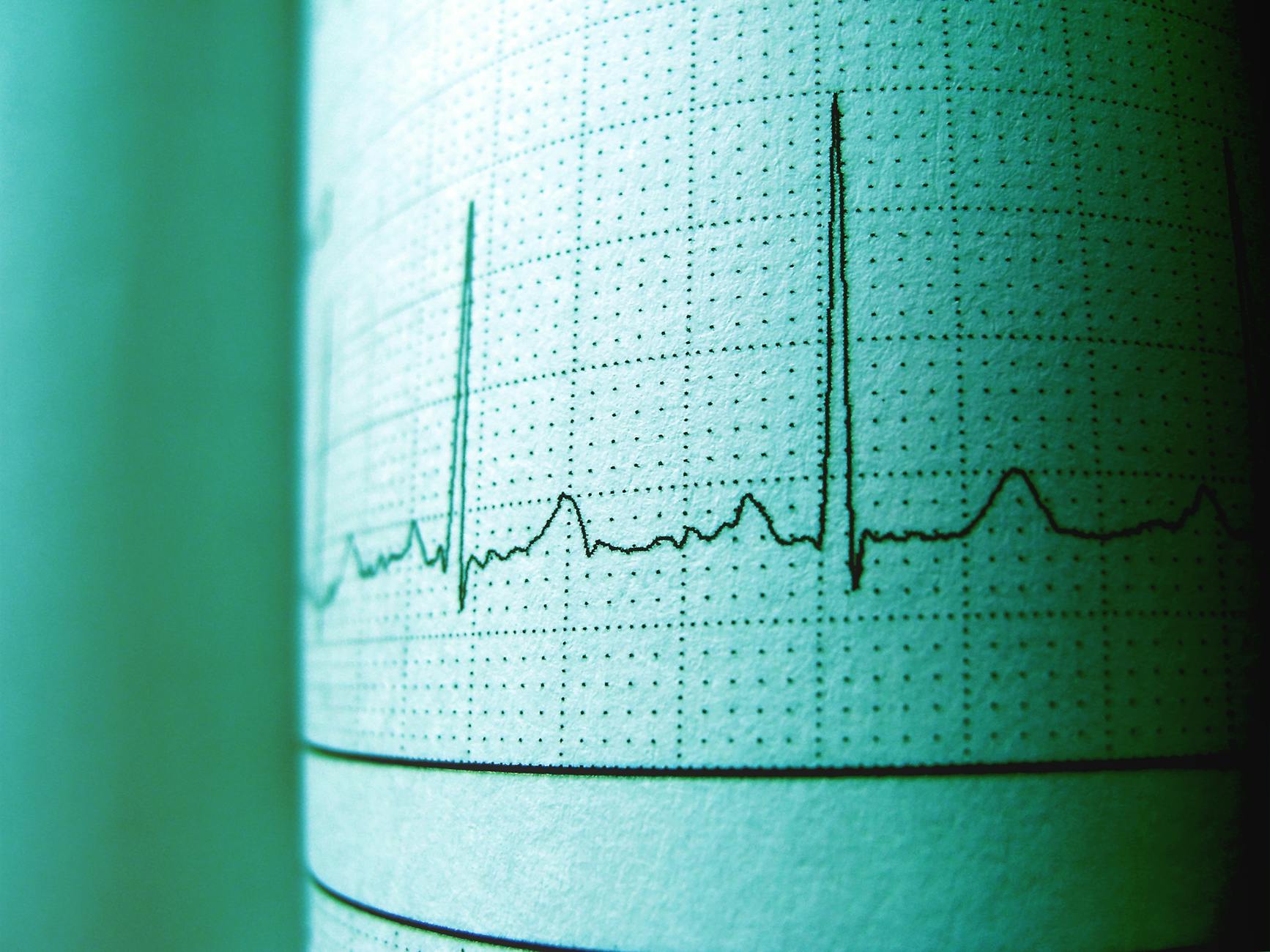
Each single heartbeat produces a recognisable pattern of waves on the ECG. Understanding these waves helps you make sense of what your doctor is looking at.
The P Wave
This small, rounded bump represents the electrical signal spreading through the atria (upper chambers). A normal P wave tells the cardiologist that the signal is starting from the right place — the SA node.
The QRS Complex
This is the tall, sharp spike you usually notice first on any ECG tracing. It represents electrical activity spreading through the ventricles (lower chambers) as they contract and pump blood. The shape, width, and height of the QRS complex carry a great deal of diagnostic information.
The T Wave
Following the QRS, the T wave is a broader, dome-shaped wave. It represents the ventricles recovering (repolarising) and getting ready for the next beat.
The Intervals and Segments
- PR interval — the time between the P wave and the QRS. If prolonged, it can suggest a heart block.
- ST segment — the flat line between the QRS and the T wave. Elevation or depression here is often the key sign cardiologists look for when investigating a heart attack.
- QT interval — the total time for ventricular contraction and recovery. An abnormally long QT can indicate risk of dangerous rhythm disturbances.
What Can an ECG Test Detect?
An ECG test is a powerful but focused tool. Here is what it can help identify:
- Heart rate — whether your heart is beating too fast (tachycardia), too slow (bradycardia), or at a normal pace.
- Heart rhythm abnormalities — such as atrial fibrillation (an irregular, often rapid rhythm), extra beats (ectopics), or heart blocks.
- Signs of a heart attack — either a current (acute) one or evidence of a previous one, shown by specific changes in the ST segment and Q waves.
- Enlarged heart chambers — suggested by changes in the amplitude and shape of the waves.
- Conduction abnormalities — delays or blockages in the heart's electrical pathways (bundle branch blocks).
- Effects of medications or electrolyte imbalances — certain drugs and abnormal potassium or calcium levels leave characteristic ECG patterns.
What an ECG Cannot Do
It is equally important to know the limitations:
- A normal ECG does not always rule out heart disease. Coronary artery disease, for example, may not show up on a resting ECG.
- It captures a snapshot — only a few seconds of your heart's activity. Intermittent rhythm problems may not appear during those seconds.
- It does not directly measure how well blood is flowing through the coronary arteries.
This is why your cardiologist may recommend additional tests — such as a stress ECG (treadmill test), echocardiogram, or Holter monitor — alongside your resting ECG.
Who Should Have an ECG Test?
Your doctor may recommend an ECG test if you are experiencing:
- Chest pain or tightness, especially on exertion
- Palpitations — a fluttering, racing, or irregular heartbeat sensation
- Unexplained breathlessness
- Dizziness or fainting episodes
- Fatigue that is new or unexplained
Beyond symptoms, ECG tests are also part of routine cardiac screening — particularly for people over 40, those with diabetes, high blood pressure, or a family history of heart disease, and individuals undergoing pre-operative assessment.
In Rajkot and across Gujarat, lifestyle factors such as rising rates of diabetes and hypertension make periodic cardiac check-ups, including an ECG test, a sensible habit for many adults.

Illustrative Example: How an ECG Guides Care
To put this in context, consider an illustrative scenario: a 55-year-old individual arrives at a cardiology clinic in Rajkot with complaints of occasional palpitations and mild chest discomfort over the past week. A quick resting ECG reveals an irregular rhythm consistent with atrial fibrillation. This single finding immediately guides the cardiologist toward appropriate next steps — further investigations, risk assessment, and a management plan. Without the ECG, the diagnosis might have taken much longer.
This example illustrates why the ECG test, though simple and affordable, remains one of the most clinically valuable tools in cardiology.
Key Takeaways
- An ECG test records the electrical activity of your heart using small electrode patches placed on the skin — nothing enters your body.
- The waves on an ECG (P wave, QRS complex, T wave) each represent a specific phase of the heartbeat.
- An ECG can detect heart rate problems, rhythm abnormalities, signs of a heart attack, and conduction disorders.
- A normal ECG is reassuring but may not rule out all heart conditions — your cardiologist will interpret it alongside your symptoms and history.
- The test is quick and comfortable, taking under 5 minutes in most settings.
- ECG testing is widely available and is often the starting point for cardiac evaluation across clinics in Rajkot and throughout Gujarat.
- Regular cardiac check-ups, including an ECG test, are especially valuable for those above 40 or with risk factors like diabetes or high blood pressure.
If you have concerns about your heart health or would like to understand your ECG results better, consider booking a consultation with a qualified cardiologist. Early evaluation and clear communication with your doctor are the foundation of good heart health.
Frequently asked questions
- Is an ECG test safe? Does it pass electricity through the body?
- Yes, an ECG test is completely safe. The electrodes placed on your skin only detect the electrical signals that your heart already produces naturally. No electricity is passed into your body at any point during the test.
- How long does an ECG test take?
- The actual recording usually takes less than 5 minutes. Including preparation (placing the electrodes) and removal, the entire appointment is typically completed within 10–15 minutes.
- Can a normal ECG result mean my heart is completely healthy?
- A normal ECG is a reassuring finding, but it does not rule out all heart conditions. Some issues, such as coronary artery disease or intermittent rhythm problems, may not show up on a single resting ECG. Your cardiologist will interpret the result alongside your symptoms, medical history, and may recommend additional tests if needed.
- When should I see a cardiologist for an ECG test?
- You should speak to a doctor promptly if you experience chest pain or tightness, palpitations, unexplained breathlessness, dizziness, or fainting. Routine ECG screening is also advisable for adults over 40, and for those with diabetes, high blood pressure, or a family history of heart disease.