
If your parent, grandparent, or sibling has had a heart attack or been diagnosed with heart disease, it is natural to wonder: Is it safe for me to play sports or work out hard? The short answer is — yes, exercise is almost always beneficial, and staying physically active is one of the most powerful things you can do for your heart. But exercising with awareness, and with the right guidance, matters enormously.
This article is for young adults — roughly ages 15 to 40 — who have a family history of heart disease and want to stay active without unnecessary risk. Let us walk through what the science says, what warning signs to watch for, and how a simple check-up can give you the confidence to move freely.
Why Family History Matters — But Is Not the Whole Story
Having a close relative with heart disease does raise your statistical risk of developing certain cardiac conditions. This includes conditions such as coronary artery disease (blockages in the heart's blood vessels), inherited high cholesterol (familial hypercholesterolaemia), and some structural heart conditions like hypertrophic cardiomyopathy (HCM).
However, family history is just one piece of the puzzle. Your lifestyle, diet, weight, stress levels, blood pressure, and blood sugar all play a huge role. Many young adults with a strong family history of heart disease go on to have perfectly healthy hearts well into old age — often because they took early action.
The goal is not to avoid exercise. The goal is to understand your personal risk so you can exercise smarter.
What Is a "Significant" Family History?
Doctors generally consider the following to be significant:
- A parent, sibling, or grandparent diagnosed with heart disease before age 55 (for men) or before age 65 (for women)
- A first-degree relative who experienced a sudden cardiac event or cardiac arrest at a young age
- A known family diagnosis of inherited heart conditions such as HCM, long QT syndrome, or familial hypercholesterolaemia
If any of the above applies to you, it is worth having a conversation with a cardiologist — not out of fear, but out of informed self-care.
The Evidence: Exercise Is Still Your Friend
Research consistently shows that regular, moderate physical activity reduces the overall risk of heart disease — even in people who have a genetic predisposition. Exercise strengthens the heart muscle, improves circulation, helps maintain healthy weight, lowers blood pressure, and reduces inflammation.
A useful way to think about it: your family history sets a stage, but your daily habits write the script.
For most young adults with a family history of heart disease, the risks of not exercising — obesity, high blood pressure, diabetes — are far greater than the risks of exercising with appropriate precautions.
What Types of Exercise Are Generally Recommended?
Exercise broadly falls into two categories:
- Aerobic (cardiovascular) exercise: Walking, jogging, cycling, swimming, dancing, playing cricket or football. This type improves heart and lung function and is excellent for heart health.
- Resistance (strength) training: Light to moderate weight training, yoga, bodyweight exercises. This helps maintain muscle mass, improves metabolism, and supports overall fitness.
For most young adults with a family history of heart disease and no diagnosed heart condition, a mix of both — around 150 minutes of moderate aerobic activity per week — is the standard recommendation from cardiology guidelines.
If you have already been diagnosed with a specific inherited condition, your cardiologist will personalise your exercise plan accordingly.
Getting Screened Before You Train Hard
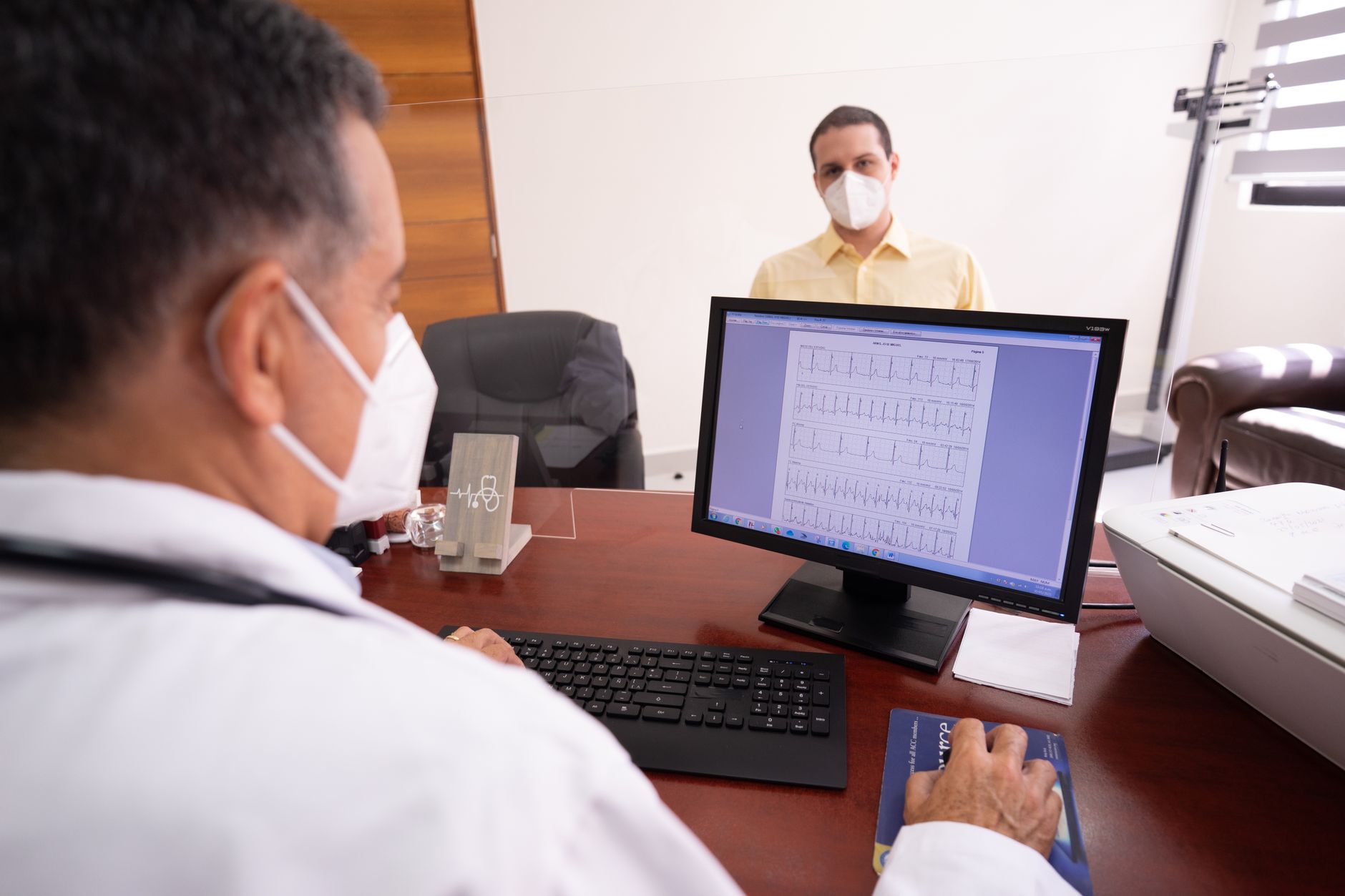
One of the most important steps for any young adult with a meaningful family history is a pre-participation cardiac evaluation. Think of it as a routine check before ramping up any serious sport or fitness programme.
In Rajkot and across Gujarat, more young people are now seeking this kind of preventive assessment — and that is a genuinely encouraging trend.
A standard cardiac evaluation for a young adult might include:
- Detailed medical and family history — your cardiologist will ask about symptoms, your relatives' diagnoses, and any medications
- Physical examination — blood pressure, heart sounds, general cardiovascular check
- ECG (Electrocardiogram) — a simple, non-invasive recording of the heart's electrical activity that can detect certain inherited rhythm abnormalities
- Echocardiogram (Echo) — an ultrasound of the heart that checks its structure and function; useful for ruling out HCM and other conditions
- Blood tests — including cholesterol, blood glucose, and sometimes specific genetic markers
This is not an alarming process. For the vast majority of young adults, the results are reassuring and they leave with a clear, confident plan for staying active.

Warning Signs to Never Ignore During Exercise
Whether or not you have a family history, all young active people should know these warning signs that warrant stopping exercise immediately and seeking medical attention:
- Chest pain or tightness during or just after exercise
- Unusual breathlessness that seems out of proportion to your effort
- Heart palpitations — a racing, fluttering, or irregular heartbeat
- Dizziness or light-headedness during physical activity
- Fainting or near-fainting (even once — this is always worth investigating)
- Excessive fatigue that is new and unexplained
A single episode of any of these during exercise — especially in someone with a family history — deserves prompt evaluation. In most cases, a treatable cause is found and normal activity resumes. But it is always safer to check.
Practical Tips for Exercising Safely
Here is a simple, actionable approach to exercising with a family history of heart disease:
- Get screened first. Before taking up competitive sport or high-intensity training, have a baseline cardiac evaluation.
- Start gradually. If you have been inactive, begin with brisk walking and build up over weeks. Avoid sudden jumps in intensity.
- Warm up and cool down. Spend 5–10 minutes warming up before each session and cooling down afterwards. This protects your heart from sudden changes in demand.
- Monitor your heart rate. A fitness tracker or smartwatch can help you stay within a safe, comfortable training zone (roughly 50–70% of your maximum heart rate for moderate exercise).
- Stay hydrated. Especially important in Rajkot's warm climate — dehydration raises cardiac strain.
- Avoid exercising when unwell. Viral illnesses, even mild ones, can temporarily affect the heart. Rest until you have fully recovered.
- Know your numbers. Keep tabs on your blood pressure, cholesterol, and blood sugar — at least once a year, and more often if advised.
- Avoid smoking and excessive alcohol. These significantly amplify the inherited risk of heart disease in young people.

A Word on Competitive Sports
Many young adults with a family history of heart disease successfully compete at school, college, or even professional level. Being a competitive athlete does not automatically exclude you — but it does mean a more thorough evaluation is warranted.
International sports cardiology guidelines recommend that competitive athletes with a significant family history undergo comprehensive screening, including an ECG and echo, before participating in high-intensity sport. In some cases — for example, if HCM is diagnosed — participation in certain competitive sports may be restricted for safety.
This is not a life sentence. It is about finding the right activity for your specific heart. For every restriction, there is usually a range of wonderful alternatives.
To illustrate: a 22-year-old with a family history of early heart disease might come in for screening, be found to have mildly elevated cholesterol but a structurally normal heart, and leave with a green light for all aerobic sport — alongside advice on diet and a six-monthly follow-up. That is a very common and reassuring outcome.
Key Takeaways
- Exercise is beneficial for young adults with a family history of heart disease — inactivity is the bigger danger for most.
- A family history of early heart disease, sudden cardiac events, or known inherited conditions is a signal to get screened, not to stop moving.
- Pre-participation cardiac screening (ECG, echo, blood tests) gives you personalised, evidence-based guidance.
- Know the warning signs during exercise — chest pain, palpitations, fainting, or unusual breathlessness — and take them seriously.
- Practical habits — gradual progression, hydration, knowing your numbers, avoiding smoking — significantly reduce your risk.
- Competitive athletes with a family history benefit from a more thorough evaluation before high-intensity training.
- In Rajkot's climate, stay hydrated and avoid exercising in peak heat hours during summer months.
If you have a family history of heart disease and want to understand your personal cardiac risk before starting or continuing an exercise programme, consider booking a consultation with a qualified cardiologist. Early, informed action is always the most heart-healthy choice you can make.
Frequently asked questions
- Is it safe for young adults with a family history of heart disease to play sports?
- For most young adults, yes — regular exercise is safe and highly beneficial even with a family history of heart disease. The key is to have a baseline cardiac evaluation (ECG, echo, and blood tests) before engaging in high-intensity sport, so you know your personal risk and can exercise with confidence.
- What tests should a young adult with a family history of heart disease get before exercising?
- A standard pre-participation cardiac evaluation typically includes a detailed medical and family history, physical examination, ECG (electrocardiogram), echocardiogram (heart ultrasound), and blood tests for cholesterol and blood sugar. Your cardiologist will advise if any additional tests are needed based on your specific history.
- What warning signs during exercise should young adults take seriously?
- Stop exercising and seek medical attention if you experience chest pain or tightness, unusual breathlessness, palpitations (racing or irregular heartbeat), dizziness, or fainting during or after physical activity. Even a single episode of fainting during exercise always warrants a cardiac evaluation.
- Can someone with an inherited heart condition like HCM still exercise?
- Many people with inherited heart conditions can still be physically active, though certain high-intensity or competitive sports may need to be modified or avoided depending on the specific diagnosis. A cardiologist with experience in sports cardiology can create a personalised, safe exercise plan tailored to your condition.