
If someone in your family — a parent, grandparent, or sibling — has had a heart attack, undergone bypass surgery, or been diagnosed with a hereditary heart condition, a very natural question arises: "Could my child be at risk too?"
The short answer is: possibly, yes — and that is not a reason to worry, but a reason to act early. Heart disease screening for children of cardiac patients is one of the most powerful tools in preventive cardiology. Catching risk factors early, when the body is still young and adaptable, gives families the opportunity to make changes that can protect a child's heart for decades to come.
This article walks you through why family history matters, when screening should begin, and what tests a cardiologist may recommend.
Why Family History Is a Real Risk Factor
Heart disease does not come out of nowhere. Genetics play a significant role in how the heart and blood vessels are built and how they age. When a parent or close blood relative has been diagnosed with heart disease — especially at a young age — a child inherits not just their smile or height, but sometimes also a predisposition toward:
- High cholesterol (familial hypercholesterolaemia): A genetic condition where cholesterol levels are abnormally high from birth, even in lean, active children.
- High blood pressure: Runs in families more often than most people realise.
- Type 2 diabetes and insulin resistance: Increases cardiovascular risk significantly.
- Structural heart abnormalities: Some conditions, like hypertrophic cardiomyopathy, have a clear hereditary pattern.
- Early coronary artery disease: If a parent had a heart attack before age 55 (men) or 65 (women), the child's risk is meaningfully higher.
It is important to understand that inheriting a risk factor is not the same as inheriting a disease. Lifestyle choices, timely screening, and early treatment can often keep these risk factors from ever becoming a health problem.
When Should Screening Begin?
There is no single age that applies to every child, but here are the evidence-based guidelines that cardiologists in India and globally follow:
For Children With a Strong Family History of High Cholesterol
- Cholesterol screening is recommended as early as age 2, if a parent has familial hypercholesterolaemia or has had a heart attack before age 55.
- For all other children with a family history of heart disease, a first lipid panel between ages 9 and 11 is widely recommended, with a repeat check in the mid-teens.
For Children With a Family History of High Blood Pressure or Diabetes
- Blood pressure should be checked at every routine health visit from age 3 onwards.
- Fasting blood sugar and HbA1c can be checked from age 10 if there is obesity or a strong family history of Type 2 diabetes.
For Children With a Family History of Inherited Heart Conditions
- If a parent or sibling has been diagnosed with hypertrophic cardiomyopathy, long QT syndrome, dilated cardiomyopathy, or another heritable cardiac condition, the child's cardiologist evaluation and ECG should ideally start in early childhood — sometimes even in infancy.
- Genetic counselling may also be recommended in these cases.
A useful rule of thumb: If a parent had a cardiac event or was diagnosed with heart disease before age 60, it is worth bringing up your child's family history with a cardiologist — regardless of whether the child seems healthy today.

What Tests Are Typically Considered?
A heart disease screening plan for a child is not complicated or uncomfortable. Here is what it commonly includes:
1. Fasting Lipid Profile (Cholesterol Test)
A simple blood test measuring total cholesterol, LDL ("bad" cholesterol), HDL ("good" cholesterol), and triglycerides. Children with familial hypercholesterolaemia often show very high LDL levels that diet alone cannot correct — and knowing this early makes a significant difference.
2. Blood Pressure Measurement
Quick, non-invasive, and done with a standard cuff. High blood pressure in children is under-recognised in India, partly because many families assume it only affects adults. Routine measurement can pick it up early.
3. Fasting Blood Sugar and HbA1c
Useful when the child has a family history of diabetes or shows signs of insulin resistance (such as weight gain around the abdomen or skin changes like acanthosis nigricans — a darkening of skin folds).
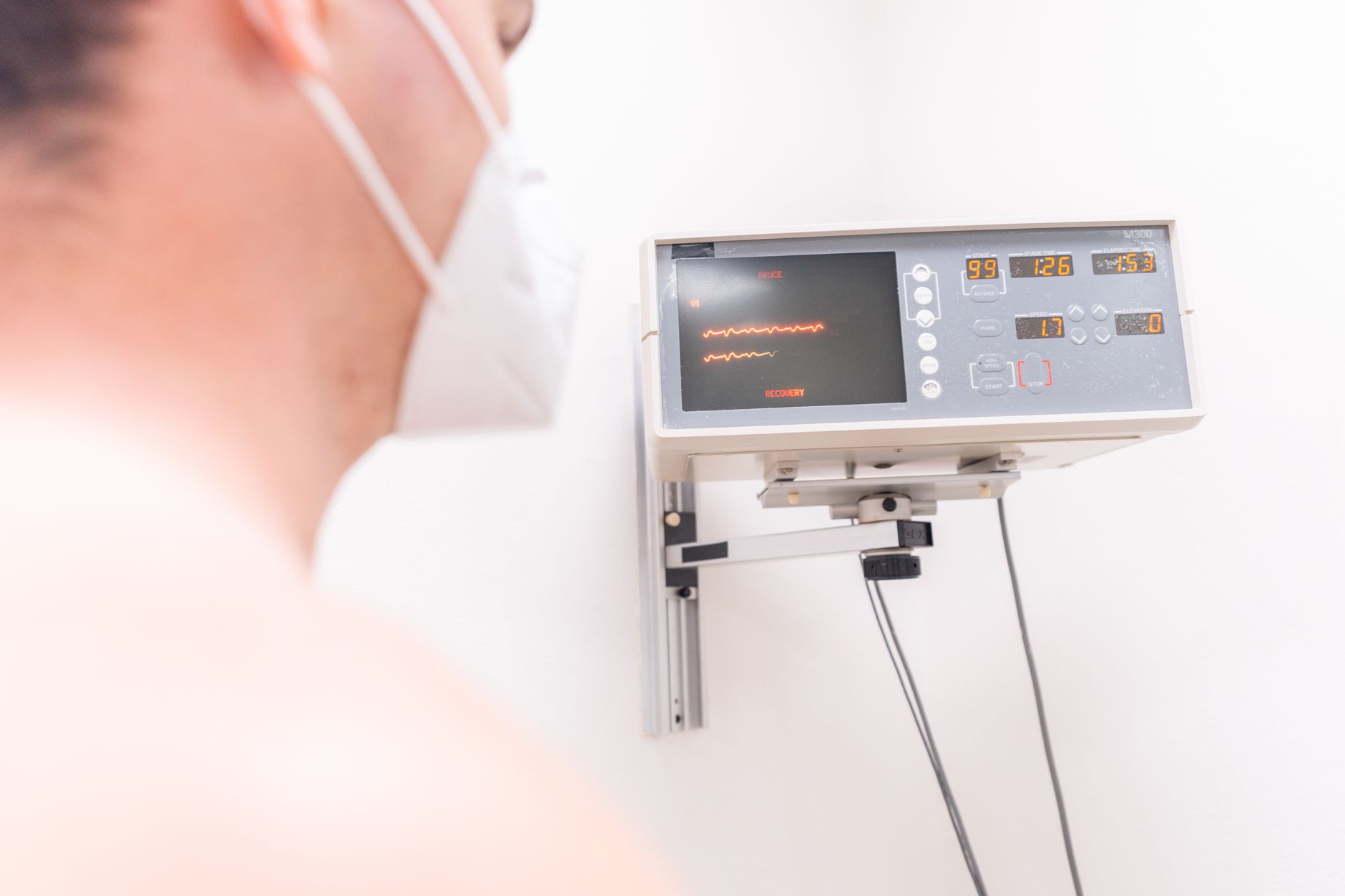
4. Electrocardiogram (ECG)
A non-invasive recording of the heart's electrical activity. It takes just a few minutes and can detect inherited rhythm disorders such as long QT syndrome, which can cause sudden fainting or, in rare cases, cardiac events during sports or exertion.
5. Echocardiogram (Echo)
An ultrasound scan of the heart. Recommended when there is a family history of structural heart conditions like hypertrophic cardiomyopathy or dilated cardiomyopathy. It is safe, uses no radiation, and gives the cardiologist a clear picture of the heart's structure and function.
6. Body Weight and BMI Assessment
Obesity in childhood is one of the fastest-growing cardiovascular risk factors in urban India. Tracking a child's BMI over time and comparing it to age- and sex-specific charts helps identify early metabolic risk.
Illustrative Example: Putting It All Together
To understand how this works in practice, consider an illustrative scenario: a 55-year-old man in Rajkot is diagnosed with a heart attack and found to have very high LDL cholesterol. His cardiologist discovers he has familial hypercholesterolaemia. His two children — aged 9 and 13 — are referred for a lipid panel. The 13-year-old is found to have an LDL of 220 mg/dL despite being a healthy weight and eating a reasonable diet. With early dietary guidance and, if needed, medical treatment, that child's risk of a future cardiac event can be dramatically reduced — simply because the family acted on information that was already available.
This kind of cascade screening — checking family members when one person is diagnosed — is one of the most effective preventive strategies in modern cardiology.
What Happens If a Risk Factor Is Found?
Discovering a risk factor in a child is not a crisis — it is an opportunity. Depending on what the tests show, a cardiologist may recommend:
- Dietary changes: Reducing saturated fats, increasing fibre, limiting processed foods and sugary drinks.
- Increased physical activity: At least 60 minutes of moderate activity daily for school-age children.
- Weight management: Guided, gradual, and never extreme.
- Medication: In cases of familial hypercholesterolaemia with very high cholesterol, statins can be used safely in children from age 8-10 under specialist supervision.
- Regular follow-up: Annual or biannual reviews to track trends, not just single readings.
The goal is never to alarm a child or make them feel unwell. Most children with managed risk factors live completely normal, active lives.

The Role of Lifestyle — Starting Young
Even when no specific risk factor is identified, children from cardiac families benefit enormously from building heart-healthy habits early. In cities like Rajkot, where lifestyles have shifted toward more screen time, processed foods, and less outdoor activity, these habits matter more than ever.
Key habits to encourage in children:
- Eat more vegetables, fruits, whole grains, and lentils (dal-chawal is not your enemy).
- Limit fried snacks, sugary drinks, and ultra-processed foods.
- Prioritise outdoor play, cycling, swimming, or any sport they enjoy.
- Maintain a regular sleep schedule — poor sleep is an underappreciated risk factor.
- Avoid passive smoking exposure at home.
Key Takeaways
- Family history of heart disease is a genuine risk factor for children, but it is manageable with early action.
- Cholesterol screening can begin as early as age 2 in high-risk families and between 9–11 for moderate-risk families.
- Blood pressure should be measured from age 3 at routine check-ups.
- ECG and echocardiogram are recommended for children with a family history of inherited heart rhythm or structural conditions.
- Finding a risk factor early is an opportunity, not a sentence — lifestyle changes and, if needed, treatment can make a lasting difference.
- Cascade screening — checking children when a parent is diagnosed — saves lives.
- Heart-healthy habits started in childhood tend to last a lifetime.
If your family has a history of heart disease and you are wondering whether your child should be screened, speaking with a qualified interventional cardiologist is the most important next step. Early conversations lead to early protection. You are welcome to book a consultation with Dr. Nikhila Pachani in Rajkot to discuss your family's heart health and create a personalised screening plan for your child.
Frequently asked questions
- At what age should children of heart patients get their first cholesterol test?
- If a parent has familial hypercholesterolaemia or had a heart attack before age 55, cholesterol testing can be recommended as early as age 2. For most other children with a family history of heart disease, the first lipid panel is suggested between ages 9 and 11, with a repeat in the mid-teens. Your cardiologist will advise based on your family's specific history.
- Is an ECG or echocardiogram safe for children?
- Yes, both tests are completely safe for children. An ECG is a non-invasive recording of the heart's electrical activity and takes just a few minutes. An echocardiogram uses sound waves (ultrasound) to image the heart — there is no radiation involved, and it is comfortable for children of all ages.
- My child looks healthy and plays sports. Do they still need heart screening?
- Appearing healthy and being active are wonderful signs, but some inherited conditions — such as high cholesterol or certain heart rhythm disorders — can be present without any obvious symptoms. In fact, some inherited heart conditions are first detected during sports screening. If there is a significant family history, a brief evaluation by a cardiologist is still advisable even for active, symptom-free children.
- What lifestyle changes help protect a child's heart if a risk factor is found?
- The most effective steps include a diet rich in vegetables, fruits, whole grains, and legumes; at least 60 minutes of physical activity daily; maintaining a healthy weight; regular sleep; and avoiding exposure to secondhand smoke. In some cases, such as familial hypercholesterolaemia, a cardiologist may also recommend medication alongside these lifestyle measures.