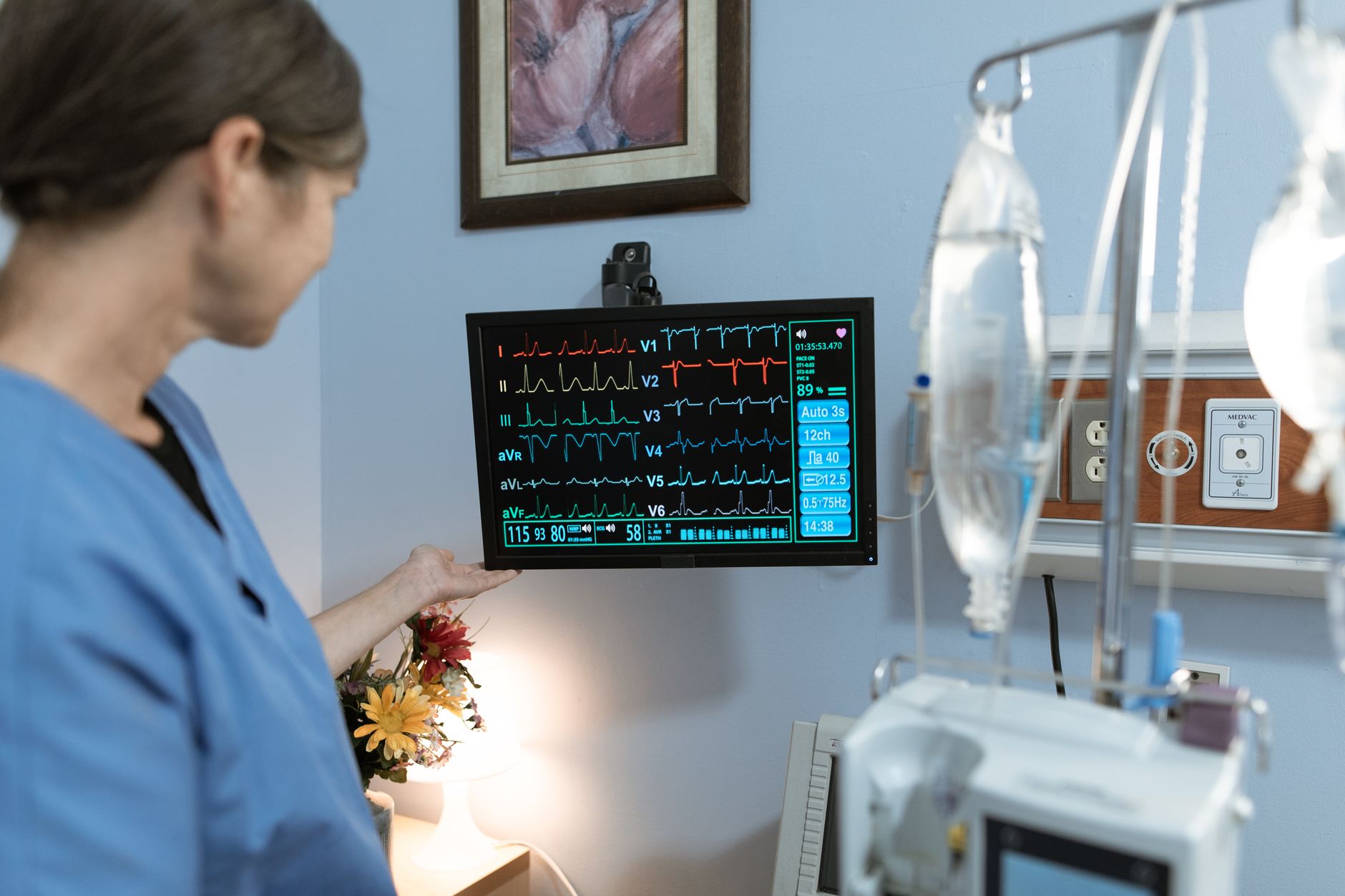
"Your ECG Shows a Left Bundle Branch Block" — Now What?
You went in for a routine health check or complained of mild breathlessness, and the doctor handed you an ECG report with the words left bundle branch block on it. It is completely natural to feel worried by a phrase you have never heard before. Take a breath. This article will explain — in plain, everyday language — what left bundle branch block meaning really is, why it appears on an ECG, what it could signal, and what steps to take next.
How Does the Heart's Electrical System Work?
Your heart is essentially a pump, but it needs a reliable electrical system to keep beating in an organised, rhythmic way. Think of this system as a set of wiring that carries an electrical signal from the top chambers (atria) down to the bottom chambers (ventricles), telling them when to squeeze and pump blood.
The pathway looks something like this:
- The sinoatrial (SA) node — the heart's natural pacemaker — fires an electrical signal.
- The signal travels to the atrioventricular (AV) node, a kind of relay station.
- From there it moves into the Bundle of His, which splits into two branches:
- Right bundle branch → activates the right ventricle
- Left bundle branch → activates the left ventricle
When both branches work normally, both ventricles contract almost simultaneously, pumping blood efficiently.

So, What Is Left Bundle Branch Block?
A left bundle branch block (LBBB) occurs when the left bundle branch is damaged or diseased, slowing or completely blocking the electrical signal travelling to the left ventricle. Instead of the left ventricle receiving its signal directly, the impulse has to travel a longer, detour route through the heart muscle itself. This delay means the two ventricles no longer contract at exactly the same time — the left ventricle lags slightly behind the right.
On an ECG (electrocardiogram), this delayed, abnormal conduction creates a very characteristic pattern that a trained cardiologist can recognise instantly. The QRS complex — the part of the ECG that represents ventricular contraction — becomes wider and differently shaped than normal.
Key point: LBBB is an ECG finding, not a disease by itself. But it is a sign that your cardiologist will want to investigate further to understand the underlying cause.
What Causes Left Bundle Branch Block?
The left bundle branch can be disrupted by several conditions. The most common ones include:
- Coronary artery disease (CAD) — reduced blood supply to the heart muscle
- High blood pressure (hypertension) — one of the most frequent causes in India, including in patients seen at cardiology clinics in Rajkot and across Gujarat
- Heart failure — weakening of the heart muscle over time
- Cardiomyopathy — disease of the heart muscle itself
- Aortic valve disease — narrowing or leaking of the aortic valve
- Age-related fibrosis — natural stiffening of the conduction tissue as people grow older
Occasionally, LBBB is found in someone with no detectable underlying heart disease. This is called isolated LBBB and is less common, but still requires monitoring.
What Are the Symptoms?
This is where LBBB can be tricky. Many people have no symptoms at all — the block is discovered only because they had an ECG for an unrelated reason, like a pre-operative check-up or a routine corporate health screening.
When symptoms do occur, they are usually related to the underlying heart condition rather than to the block itself. Watch for:
- Shortness of breath, especially on mild exertion
- Fatigue or unusual tiredness
- Dizziness or light-headedness
- Palpitations (awareness of the heartbeat)
- Fainting (syncope) — this needs urgent evaluation
If you experience chest pain, sudden severe breathlessness, or fainting, please seek medical care immediately.

How Is LBBB Diagnosed and Evaluated?
An ECG is the first step, but it is rarely the last. After an LBBB is identified, your cardiologist will typically recommend a series of tests to understand why it is there and whether the heart is being affected. These may include:
Echocardiogram (Echo)
An ultrasound of the heart that shows the size, structure, and pumping function of each chamber. In LBBB, the echo can reveal whether the left ventricle is contracting abnormally (a pattern called dyssynchrony) and whether the pumping function — measured as the ejection fraction — is reduced.
Stress Test (Treadmill or Pharmacological)
This checks how the heart behaves under exertion and can help detect hidden coronary artery disease that may be the root cause.
Blood Tests
Markers like BNP (B-type natriuretic peptide) and troponin give clues about heart muscle stress or damage.
Holter Monitor
A 24–48 hour ECG recording worn at home, useful if there are also rhythm concerns.
CT Coronary Angiography or Invasive Angiography
Recommended when coronary artery disease is suspected as the underlying cause.
The specific tests chosen will depend on your age, symptoms, other health conditions, and your cardiologist's clinical judgment.
What Does the Treatment Look Like?
Treatment of LBBB is not about treating the block itself — it is about treating the underlying cause and managing any impact on heart function.
- Hypertension: Good blood pressure control with medicines and lifestyle changes.
- Coronary artery disease: Medications, lifestyle modification, or procedures like angioplasty when needed.
- Heart failure with LBBB: This is an important combination. When the ejection fraction is significantly reduced and LBBB is present, a specialised pacemaker called Cardiac Resynchronisation Therapy (CRT) may be recommended. A CRT device paces both ventricles simultaneously, restoring coordinated contraction and improving symptoms significantly.
- Isolated LBBB with normal heart function: Regular follow-up and monitoring, with no immediate intervention needed in most cases.
Key takeaways:
- LBBB is an ECG pattern showing a delayed electrical signal to the left ventricle.
- It is a finding, not a standalone disease — the underlying cause matters most.
- Many people with LBBB have no symptoms and lead full, active lives.
- High blood pressure and coronary artery disease are the most common causes in India.
- An echocardiogram is almost always the next step after an LBBB is found on ECG.
- Treatment targets the root cause, not the block itself.
- CRT pacemakers can significantly help when LBBB coexists with heart failure.

Living With LBBB: Practical Guidance
For most people, an LBBB diagnosis does not mean a dramatic change in daily life. However, a few sensible habits go a long way:
Stay active — wisely. Gentle, regular physical activity like walking, yoga, or swimming is beneficial for heart health. Discuss with your cardiologist before starting any new or intense exercise programme.
Manage your blood pressure. If you have hypertension, take your medications regularly, reduce salt intake, and monitor your readings at home. Inconsistent blood pressure control is a common challenge seen in patients across Rajkot and Gujarat due to dietary habits and lifestyle — but it is very manageable with the right support.
Attend all follow-up appointments. LBBB sometimes progresses or remains stable — your cardiologist will track this with periodic ECGs and echos.
Carry a copy of your ECG. If you ever visit an emergency department, having your baseline ECG is very helpful, because LBBB can make it harder to diagnose a heart attack on a standard ECG — doctors need to know your baseline pattern.
Control other risk factors. Diabetes, high cholesterol, and smoking all worsen the underlying conditions that cause LBBB. Managing these is equally important.
When Should You See a Cardiologist Urgently?
See a cardiologist or go to an emergency facility without delay if you develop:
- New or worsening chest pain or pressure
- Sudden shortness of breath at rest
- Fainting or near-fainting episodes
- A rapid, fluttering, or very irregular heartbeat
A Note on LBBB in Younger vs. Older Adults
In someone under 50 with no other risk factors, a newly detected LBBB can sometimes feel alarming. An illustrative example: a 42-year-old who gets an ECG before a routine surgery might be surprised to find LBBB with no prior symptoms. In many such cases, a comprehensive evaluation — echo, stress test, and blood work — returns normal results, and the person requires only periodic follow-up. In contrast, an older adult with longstanding hypertension and newly detected LBBB warrants a more detailed workup promptly. Age, risk factors, and symptoms together guide the urgency and depth of investigation.
Final Thoughts
Seeing "left bundle branch block" on your ECG report can feel unsettling, but understanding the left bundle branch block meaning is the first step towards taking control of your heart health. With the right evaluation and guidance from a qualified cardiologist, most people with LBBB can manage the condition well and continue living full, active lives.
If you have recently been told you have an LBBB or have concerns about your ECG results, we encourage you to book a consultation with a qualified interventional cardiologist for a thorough, personalised evaluation. Early assessment makes all the difference.
Frequently asked questions
- Is left bundle branch block dangerous?
- LBBB itself is an ECG finding rather than a disease. Its significance depends on the underlying cause. When associated with conditions like heart failure or coronary artery disease, it needs careful evaluation and treatment. In some people with normal heart function, LBBB requires only regular monitoring. A cardiologist can assess your specific situation.
- Can left bundle branch block go away on its own?
- In most cases, LBBB does not resolve on its own. However, if it is caused by a reversible condition — such as a temporary inflammation of the heart or extremely rapid heart rate — it may improve once the underlying issue is treated. Persistent LBBB is usually a long-term finding that requires ongoing follow-up.
- Does LBBB mean I will need a pacemaker?
- Not necessarily. A pacemaker (specifically a Cardiac Resynchronisation Therapy device) is recommended only when LBBB coexists with significantly reduced heart pumping function and symptoms of heart failure. Many people with LBBB have normal or near-normal heart function and do not require any device therapy.
- Can I exercise normally if I have LBBB?
- Gentle to moderate regular exercise — such as walking, yoga, or swimming — is generally encouraged for heart health. However, you should always discuss your specific exercise plan with your cardiologist, who will advise you based on your ECG findings, echo results, and overall health status before recommending an activity level.