
Why the First Few Minutes Matter Most
A cardiac emergency is one of the most time-sensitive medical situations a person can face. Whether it is a heart attack or sudden cardiac arrest, the outcome depends heavily on what happens in the very first minutes — long before an ambulance arrives or a hospital door opens.
In India, studies suggest that a large number of heart-attack-related deaths happen outside the hospital, often because bystanders did not recognise the warning signs or did not know what to do. In cities like Rajkot, where families are close-knit and often the first to respond, a little knowledge can be the difference between life and loss.
This article walks you through how to recognise a cardiac emergency, what the warning signs look like, and the clear, calm steps you can take right away.
Heart Attack vs. Sudden Cardiac Arrest: Know the Difference
People often use these two terms together, but they describe different events — and understanding the difference helps you respond correctly.
Heart Attack (Myocardial Infarction)
A heart attack happens when blood flow to a part of the heart muscle is blocked, usually by a clot in a coronary artery. The heart keeps beating, but that section of muscle begins to suffer damage. The person is usually conscious and breathing but is in significant discomfort.
Sudden Cardiac Arrest (SCA)
Sudden cardiac arrest happens when the heart's electrical system malfunctions and the heart stops beating effectively. The person collapses, becomes unresponsive, and stops breathing normally. This is immediately life-threatening — brain damage can begin within four to six minutes.
Both are cardiac emergencies. Both require immediate action.
Warning Signs of a Cardiac Emergency
Symptoms can vary between individuals, and they are sometimes mistaken for indigestion, anxiety, or muscle pain. Knowing the full range of warning signs helps you act quickly and confidently.
Classic Symptoms (More Common in Men)
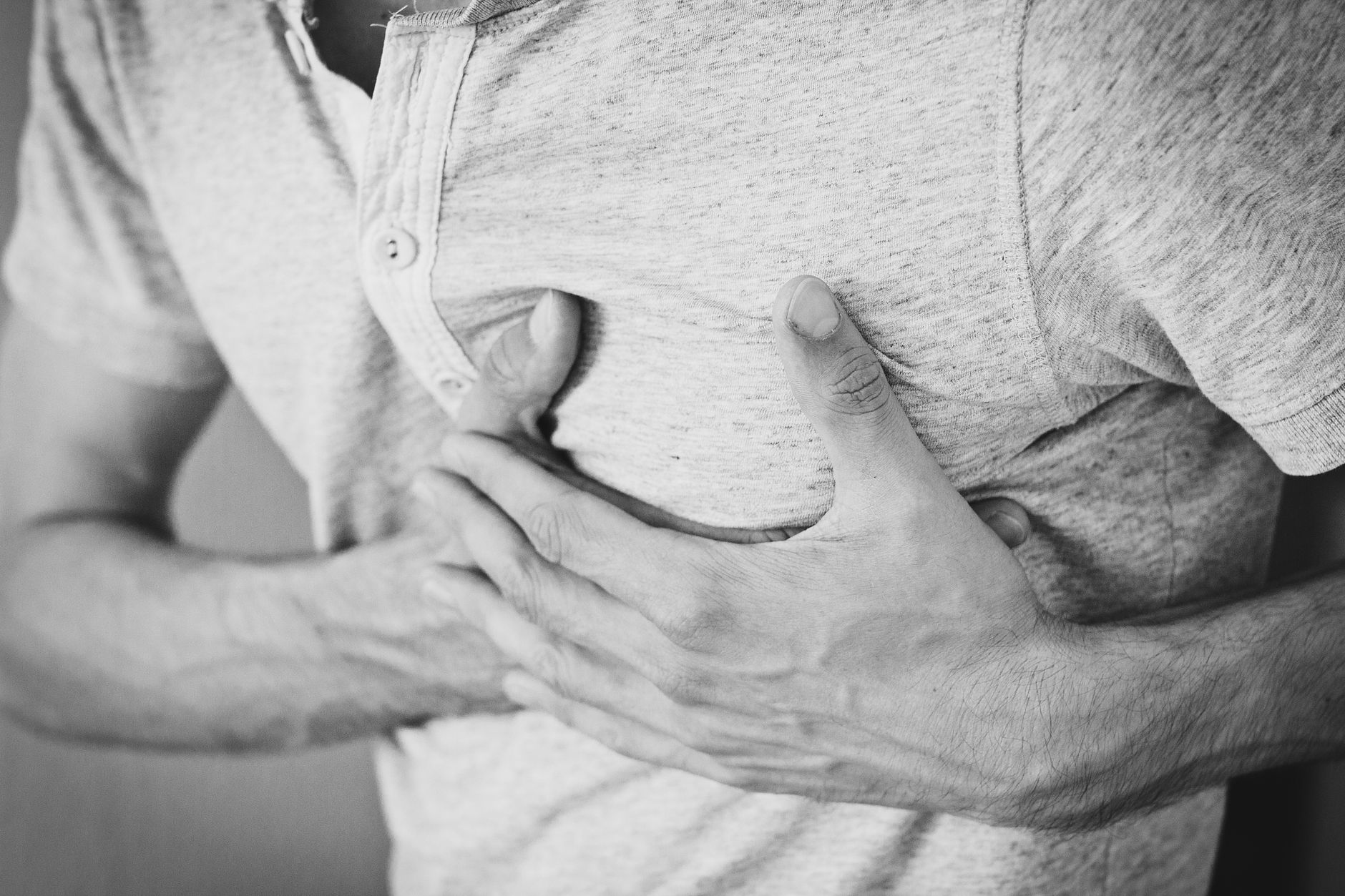
- Chest pain, pressure, tightness, or squeezing — often described as a heavy weight on the chest
- Pain that spreads to the left arm, shoulder, jaw, neck, or back
- Shortness of breath, even at rest
- Sweating — sudden, cold, or clammy perspiration
- Nausea or vomiting
- Dizziness or lightheadedness
Atypical Symptoms (More Common in Women, Diabetics, and Older Adults)
- Unusual fatigue that comes on suddenly
- Discomfort in the upper abdomen, sometimes confused with acidity
- Mild or no chest pain at all
- Feeling of unease or "something is not right"
Key point: Symptoms that come on suddenly, are more intense than usual, or do not go away after rest or antacids deserve immediate medical attention. Do not wait to "see if it passes."
Signs of Sudden Cardiac Arrest
- Sudden collapse
- No response to voice or touch
- Absent or abnormal gasping breathing
- No pulse
Key Takeaways
- A cardiac emergency can affect anyone — at any age, at any time
- Heart attacks and sudden cardiac arrest are different events requiring slightly different responses
- Warning signs can be subtle, especially in women, older adults, and people with diabetes
- Every minute without treatment during cardiac arrest reduces survival chances significantly
- Calling emergency services immediately is the single most important first step
- Hands-only CPR by a bystander can more than double survival chances
- Do not drive yourself to the hospital if you suspect a heart attack — call for help
What To Do in a Cardiac Emergency: Step by Step
Staying calm and following a clear sequence of actions gives the best possible chance of a good outcome.
Step 1 — Call for Emergency Help Immediately
Dial 112 (India's national emergency number) or your local emergency services right away. Do not wait to see if symptoms improve. Speak clearly: state your location, describe the symptoms, and stay on the line.
If you are in Rajkot, note the nearest landmark or area so that the ambulance can reach you quickly.
Step 2 — Help the Person Sit or Lie Down Comfortably
If the person is conscious and breathing:
- Help them sit down or lie down in a comfortable position (semi-reclined often feels easier for breathing)
- Loosen any tight clothing around the neck, chest, or waist
- Keep them calm and reassure them that help is on the way
- Do not give food or water
Step 3 — Aspirin (Only If Appropriate)
If the person is conscious, not allergic to aspirin, and can swallow safely, a single 325 mg aspirin tablet chewed slowly can help slow the blood clot. However, do not delay calling emergency services for this step, and do not give aspirin if you are unsure about allergies or if the person has been advised against it.
Step 4 — Begin CPR If the Person Is Unresponsive
If the person is unresponsive and not breathing normally, begin Hands-Only CPR immediately:
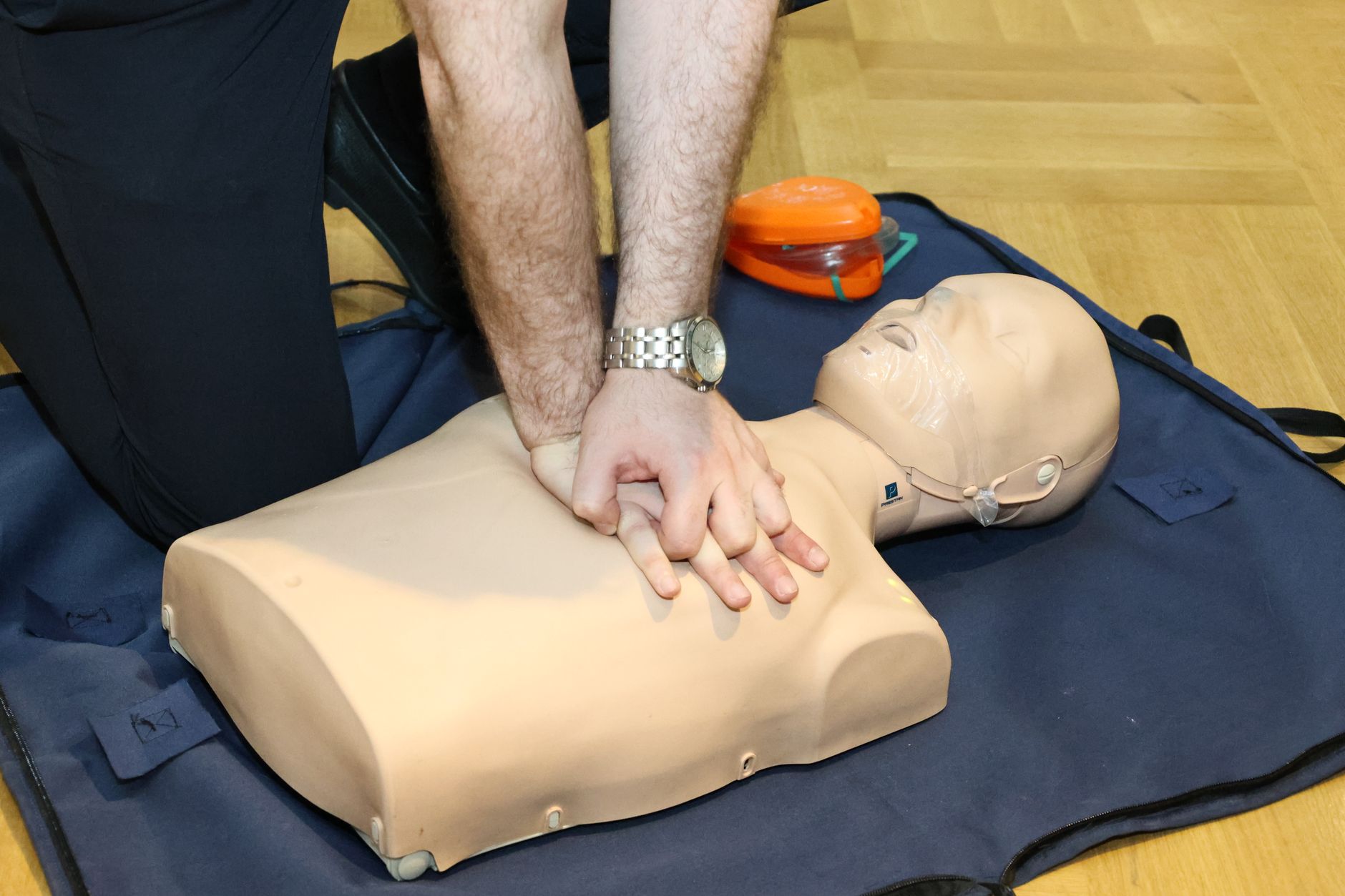
- Place the heel of one hand on the centre of the chest (lower half of the breastbone)
- Place your other hand on top, fingers interlaced
- Press down firmly and quickly — aim for at least 5 cm depth
- Give 100–120 compressions per minute (roughly the beat of the song "Stayin' Alive")
- Continue until emergency services arrive or the person shows signs of life
If you have been trained in full CPR (with rescue breaths), use a ratio of 30 compressions to 2 rescue breaths.
Step 5 — Use an AED If Available
Automated External Defibrillators (AEDs) are increasingly available in public spaces — airports, malls, some corporate offices. If one is nearby:
- Switch it on — it will give you clear voice instructions
- Attach the pads as shown in the diagrams on the device
- Follow the prompts; the machine will analyse the heart's rhythm and advise a shock if needed
You cannot harm the person by using an AED incorrectly — the device will only deliver a shock if it detects a specific dangerous rhythm.
Common Mistakes That Cost Precious Time
Even well-meaning people sometimes make decisions that delay care. Here are the most common ones to avoid:
- Waiting for symptoms to go away — cardiac symptoms that persist beyond a few minutes need emergency attention
- Driving yourself or the patient to hospital — in a heart attack, a patient can deteriorate rapidly; an ambulance team can begin treatment on the way
- Dismissing atypical symptoms — "it's just gas" or "it's just stress" are phrases that have delayed care far too often
- Hesitating to start CPR — imperfect CPR is far better than no CPR
How Families in Rajkot Can Prepare Ahead of Time
Preparation before an emergency occurs is the most powerful step you can take. Here are a few practical suggestions:
- Save emergency numbers on every family member's phone (112, your nearest hospital, your cardiologist)
- Learn Hands-Only CPR — community classes are available and take just a few hours
- Know who in your family has risk factors — high blood pressure, diabetes, smoking history, or a family history of heart disease increases risk
- Keep a list of medications ready — in an emergency, this information helps paramedics and emergency doctors act faster
A 55-year-old individual with well-controlled blood pressure, for example, might still experience a cardiac emergency if they also have undiagnosed high cholesterol or a family history of early heart disease. Knowing the warning signs means their family can respond without hesitation.
When to See a Cardiologist
Not every episode of chest discomfort is a cardiac emergency — but all unexplained or recurring chest pain, breathlessness, or palpitations deserve a proper cardiac evaluation. Conditions like unstable angina often give warning before a full heart attack. Catching and managing these early can prevent a crisis from developing in the first place.
Regular check-ups, a heart-healthy lifestyle, and an open conversation with your cardiologist about your personal risk are the foundations of long-term heart health.
If you or someone in your family has risk factors for heart disease — or if you have experienced any of the symptoms described here — please do not delay. Reach out to a qualified cardiologist for a personalised evaluation. Early care is always the most effective care.
Frequently asked questions
- What is the most important thing to do during a cardiac emergency?
- Call emergency services (dial 112 in India) immediately. Do not wait for symptoms to pass. If the person is unresponsive and not breathing, begin Hands-Only CPR right away while waiting for help to arrive.
- How is a heart attack different from sudden cardiac arrest?
- A heart attack occurs when blood flow to the heart muscle is blocked — the person is usually conscious and breathing but in pain. Sudden cardiac arrest is when the heart stops beating effectively, causing the person to collapse and become unresponsive. Both are cardiac emergencies requiring immediate action.
- Can I perform CPR if I have never been trained?
- Yes. Hands-Only CPR — pushing hard and fast on the centre of the chest at about 100–120 compressions per minute — can significantly improve survival chances even without formal training. Imperfect CPR is always better than no CPR.
- What warning signs of a cardiac emergency are easy to miss?
- Some people, especially women, older adults, and those with diabetes, may experience atypical symptoms such as unusual fatigue, mild upper abdominal discomfort, jaw or back pain, or simply a feeling that something is wrong — without classic chest pain. Any sudden, unexplained or persistent symptoms should be taken seriously and assessed by a doctor.