
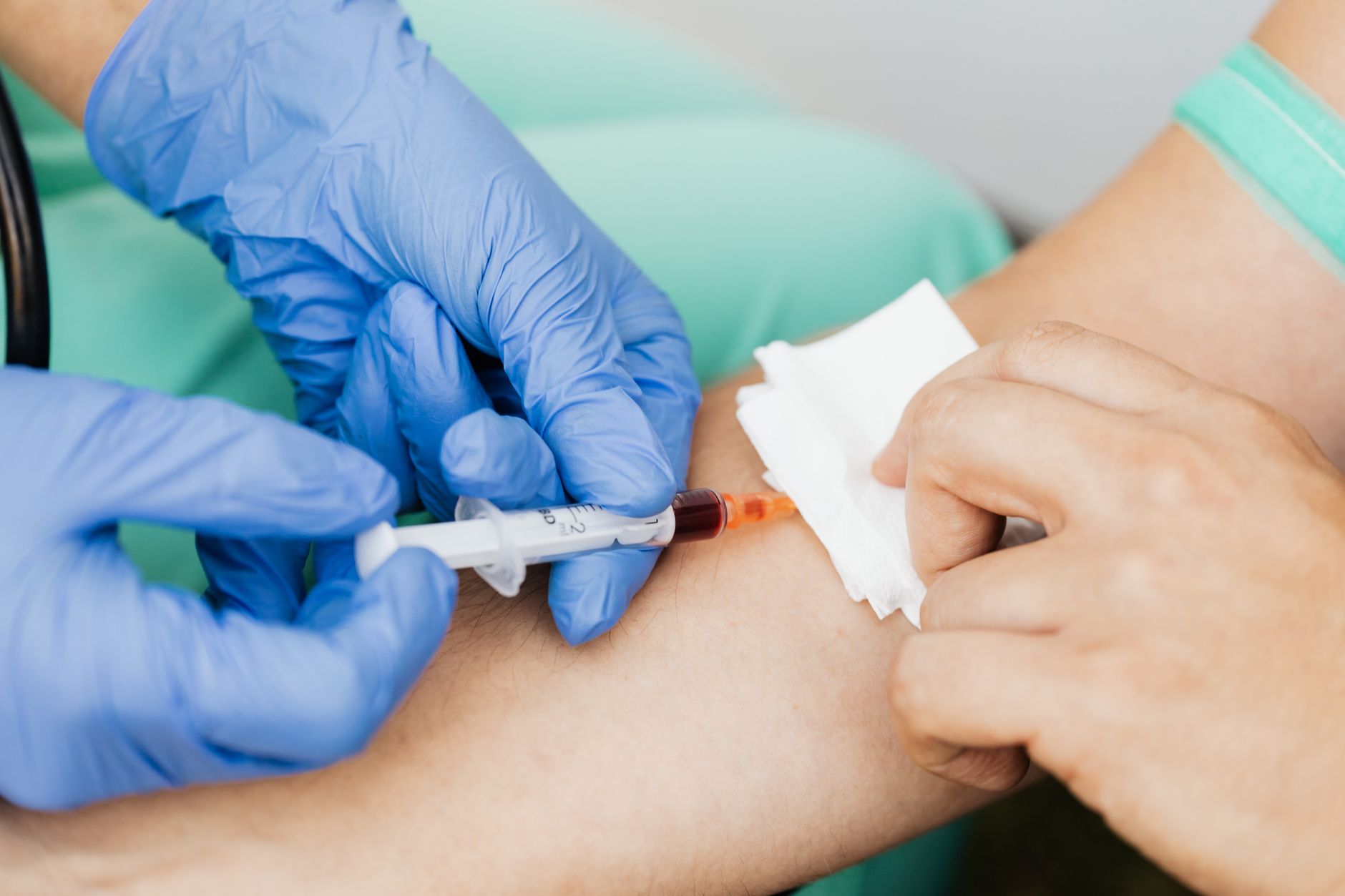
You have just arrived at the emergency room with chest pain. Within minutes, a nurse draws blood and tells you the doctor has ordered a "troponin test." You nod, perhaps a little unsure of what that means. You are not alone — most patients have never heard of troponin, CK-MB, or BNP until the moment these tests become very important to them.
This article explains, in plain language, what cardiac biomarker blood tests are, why doctors order them after chest pain, and what the results actually mean for your heart health.
What Are Cardiac Biomarkers?
Cardiac biomarkers are proteins and enzymes that normally live inside your heart muscle cells. When heart muscle is damaged — for example, during a heart attack — these cells break open and release their contents into the bloodstream. A blood test can then detect them, giving doctors a clear signal that the heart has been stressed or injured.
Think of it this way: if a water pipe bursts inside a wall, water leaks out and stains the ceiling below. Cardiac biomarkers are the "stain" that tells the doctor exactly where the "leak" is and how serious it might be.
Different biomarkers rise and fall at different times after a heart attack. This is why doctors often repeat the blood test every 3 to 6 hours — to track the "curve" of rising and falling levels, not just a single number.
The Star of the Show: Troponin
Why the Troponin Test Is Central to Heart Attack Diagnosis
When it comes to troponin test heart attack diagnosis, troponin is considered the gold-standard biomarker worldwide — and for good reason. Troponin is a protein complex that controls how heart muscle fibres contract. There are two cardiac-specific forms:
- Troponin I (cTnI)
- Troponin T (cTnT)
Both are highly specific to heart muscle. That means a raised troponin level almost always points to the heart, unlike older tests that could be confused by muscle injury elsewhere in the body.
High-Sensitivity Troponin (hs-cTn)
Modern hospital laboratories — including those in Rajkot's well-equipped cardiac centres — now routinely use high-sensitivity troponin (hs-cTn) assays. These can detect extremely small amounts of troponin in the blood, often within 1 to 3 hours of chest pain starting. This allows doctors to either confidently rule out a heart attack or begin treatment much faster than was possible even a decade ago.
What Does a "High" Troponin Mean?
A troponin result above the laboratory's reference limit (called the 99th percentile) is considered elevated. However, context always matters:
- A rapidly rising troponin level strongly suggests an acute heart attack (myocardial infarction).
- A mildly elevated but stable troponin may point to other causes — heart failure, myocarditis (inflammation of the heart), severe infections, kidney disease, or even very strenuous exercise.
- Serial testing (repeated samples over time) helps the cardiologist distinguish between these possibilities.
Important: A single troponin number never tells the whole story. Your doctor interprets it alongside your symptoms, ECG findings, medical history, and physical examination.
CK-MB: The Older, Still-Useful Marker
What Is CK-MB?
Creatine kinase-MB (CK-MB) is an enzyme found mainly in heart muscle. Before high-sensitivity troponin tests became available, CK-MB was the primary blood test used to diagnose heart attacks. It rises within 3 to 6 hours of a heart attack, peaks at around 12 to 24 hours, and returns to normal within 48 to 72 hours.
Why Doctors Still Use CK-MB
Even though troponin has largely replaced CK-MB as the primary diagnostic test, CK-MB still serves useful purposes:
- Timing the heart attack: Because CK-MB returns to normal faster than troponin, a normal CK-MB with a still-elevated troponin can suggest the heart attack happened several days ago rather than acutely.
- Detecting re-infarction: If a patient has a second heart attack shortly after the first, CK-MB levels will rise again. Troponin, which stays elevated for days, can be harder to interpret in this situation.
- Monitoring after certain procedures: Some cardiac procedures can cause mild, expected rises in CK-MB, which doctors track to ensure everything is within safe limits.
Other Important Cardiac Blood Tests
Myoglobin
Myoglobin is a protein found in all muscle cells — heart and skeletal muscle alike. It rises very quickly after a heart attack (within 1 to 3 hours), which once made it useful as an early warning marker. However, because it is not heart-specific (a sports injury or muscle strain can also raise it), it is now used less frequently as a standalone test.
BNP and NT-proBNP: The Heart Failure Markers
Brain natriuretic peptide (BNP) and its inactive fragment NT-proBNP are released by the heart's lower chambers (ventricles) when they are under pressure or stretch — as happens in heart failure. Elevated BNP levels help doctors:
- Confirm whether breathlessness is coming from the heart or the lungs
- Assess how severe heart failure is
- Monitor how well treatment is working over time
These markers are particularly helpful in emergency settings where a patient arrives breathless and the cause is unclear.
D-Dimer
While not a "cardiac" biomarker in the traditional sense, D-dimer is often ordered alongside cardiac tests in chest pain patients. It screens for blood clots in the lungs (pulmonary embolism), which can mimic a heart attack. A normal D-dimer in a low-risk patient is very reassuring that a clot is unlikely.
LDH (Lactate Dehydrogenase)
LDH is an older enzyme test that is rarely used today for acute heart attack diagnosis. It rises late (24–48 hours) and stays elevated for up to 14 days, which was once useful to diagnose heart attacks in patients who presented late. Modern high-sensitivity troponin assays have largely replaced this role.
How the Tests Work Together: A Typical Clinical Picture
Imagine a 55-year-old man arrives at a cardiology clinic in Rajkot with a 2-hour history of chest tightness and mild sweating. His doctor would typically:
- Take an immediate ECG to look for ST-segment changes
- Draw blood for high-sensitivity troponin, CK-MB, and a full blood count
- Repeat the troponin at 1–3 hours
- Assess clinical risk using validated scoring tools alongside the test results
If troponin levels are rising significantly between the first and second sample, and the ECG shows changes, the team can act swiftly — often moving to an angiogram to assess the coronary arteries. The combination of tests, rather than any single result, guides the decision.
This is why the troponin test for heart attack diagnosis is never interpreted in isolation — it is one powerful piece of a larger puzzle.
What Patients Often Ask
"My troponin was slightly raised — does that mean I had a heart attack?"
Not necessarily. Many conditions can cause a mild, stable rise in troponin without a true heart attack. Your cardiologist will look at the trend (is it going up or staying flat?), your symptoms, and your ECG to reach a conclusion. Try not to panic over a single number.
"Can I eat or do anything special before the test?"
No special preparation is needed. Cardiac biomarker tests are done from a simple blood draw and can be performed at any time, even on an empty or full stomach.
"How long do results take?"
In most well-equipped hospitals, high-sensitivity troponin results are available within 30 to 60 minutes of the blood draw. This speed is one reason these tests have transformed emergency cardiac care.
Key Takeaways
- Cardiac biomarkers are proteins released into the blood when heart muscle is damaged — they are the body's own distress signal.
- Troponin (cTnI or cTnT) is the gold-standard test for heart attack diagnosis; high-sensitivity versions can detect damage within 1–3 hours.
- CK-MB remains useful for timing a heart attack and detecting re-infarction.
- BNP/NT-proBNP helps diagnose and monitor heart failure.
- A single test result is never interpreted alone — the trend over time, ECG, and clinical picture all matter.
- Raised troponin does not always mean a heart attack; many other conditions can elevate it mildly.
- Repeat testing (serial biomarkers) is standard practice and provides much more information than a one-time result.
- Always share your full medical history, current medications, and all symptoms with your doctor — context changes everything.
If you or a loved one has recently experienced chest pain, breathlessness, or received an unexpected blood test result, it is always wise to discuss the findings with a qualified cardiologist who can interpret them in the context of your complete health picture. To understand your cardiac health better or to discuss your test results, consider booking a consultation with a specialist cardiologist in Rajkot.
Frequently asked questions
- What is a troponin test and why is it done after chest pain?
- A troponin test is a blood test that measures the level of troponin proteins released by damaged heart muscle cells. After chest pain, doctors use it to determine whether the heart muscle has been injured — as happens in a heart attack. Because troponin is highly specific to heart muscle, elevated levels are a strong indicator of cardiac damage. The test is usually repeated every 1–3 hours to track whether levels are rising, which helps confirm or rule out a heart attack quickly.
- What does a high troponin level mean?
- A high troponin level means there is some degree of heart muscle stress or damage. In the context of chest pain and an abnormal ECG, a rising troponin strongly suggests a heart attack. However, troponin can also be elevated in other conditions such as heart failure, myocarditis (heart inflammation), kidney disease, pulmonary embolism, or even severe infections. Your cardiologist will always interpret your troponin result alongside your symptoms, ECG, and medical history before reaching a diagnosis.
- What is the difference between troponin and CK-MB?
- Both troponin and CK-MB are proteins released by damaged heart muscle, but they behave differently. Troponin is more specific to the heart and remains elevated for 7–14 days after a heart attack, making it ideal for diagnosis. CK-MB rises and falls more quickly (returning to normal within 48–72 hours), which makes it useful for timing a heart attack or detecting a second heart attack shortly after the first. Modern guidelines favour high-sensitivity troponin as the primary diagnostic test, but CK-MB still provides valuable additional information in certain situations.
- Can troponin be elevated without a heart attack?
- Yes, troponin can be mildly elevated without a heart attack occurring. Conditions such as myocarditis, heart failure, severe infections (including sepsis), pulmonary embolism, chronic kidney disease, and even extreme physical exertion can raise troponin levels. This is why doctors look at the pattern of troponin over time (serial testing) and consider the full clinical picture rather than relying on a single reading. A stable, mildly elevated troponin is very different from a rapidly rising one.